Making differential closure more
explicit |
|
|
 . This article has
been written using GNU TeXmacs [5].
. This article has
been written using GNU TeXmacs [5].
 . This work has
been supported by the ODELIX project (number 101142171).
. This work has
been supported by the ODELIX project (number 101142171).
Funded by the European Union. Views and opinions expressed are however those of the author(s) only and do not necessarily reflect those of the European Union or the European Research Council Executive Agency. Neither the European Union nor the granting authority can be held responsible for them. |
 |
Given a differential field |
Several well-known first order theories admit natural explicit models.
For instance, the reals are the archetype of a real closed field and the
complex numbers are a natural example of an algebraically closed field
of characteristic zero. More recently, it was shown that both the field
of transseries and maximal Hardy fields are models of the theory of
closed 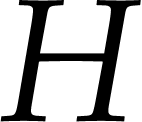 -fields [1,
2]. (Here an -field
is a differential field with an ordering that satisfies suitable
compatibility conditions with the derivation.)
-fields [1,
2]. (Here an -field
is a differential field with an ordering that satisfies suitable
compatibility conditions with the derivation.)
The first order theories behind the above three examples have excellent model theoretic properties: they are all complete, model complete, and they admit quantifier elimination for appropriate languages. In contrast, even though the theory of differentially closed fields of characteristic zero also enjoys these properties [14, 12, 3], no simple explicit models are known in this case. The goal of this paper is to construct such models.
We recall from [11, 7, 8] that a
differential ring 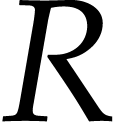 is a ring together
with a derivation
is a ring together
with a derivation  . The set
 is called its ring of constants. Given
a differential ring , we
define the set of differential polynomials in
is called its ring of constants. Given
a differential ring , we
define the set of differential polynomials in 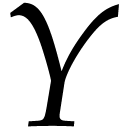 over by
  .
Then
.
Then 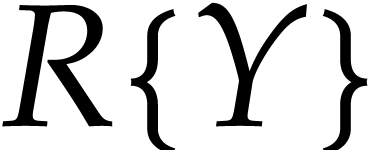 is a differential ring for the unique
derivation that extends the derivation on and
such that
is a differential ring for the unique
derivation that extends the derivation on and
such that  for all
 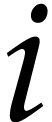 .
Given
.
Given 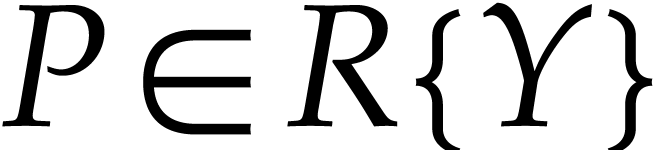 , the minimal
 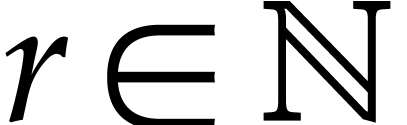 with
with  is called its order
and we denote it by
is called its order
and we denote it by  .
.
A differential field is a differential ring that is also a
field. Let 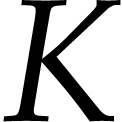 be a differential field of
characteristic zero. We say that is
differentially closed if it is algebraically closed and for any
be a differential field of
characteristic zero. We say that is
differentially closed if it is algebraically closed and for any
 with
with  ,
there exists a
,
there exists a 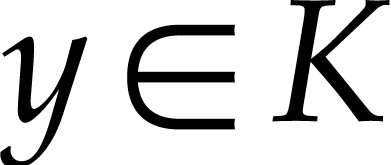 with
with 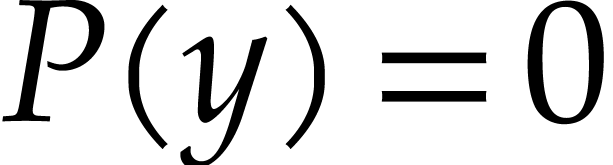 and
and
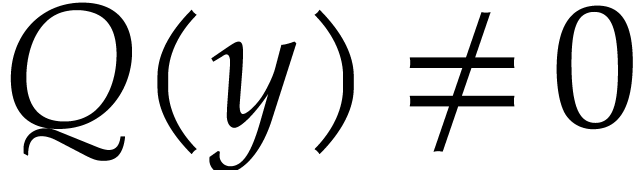 . This notion was first
introduced by Robinson [12] and subsequently elaborated by
Blum [3]. The definition that we use here is due to Blum.
. This notion was first
introduced by Robinson [12] and subsequently elaborated by
Blum [3]. The definition that we use here is due to Blum.
Although it is known that any differential field
of characteristic zero can be embedded into a differentially closed
field
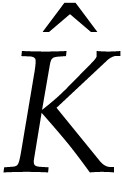 ,
the proof is abstract and does not provide us with an explicit
description of
.
A more natural—but still fairly lengthy—construction has
recently been proposed in [
18
]. Other ideas were raised in a recent discussion on Mathoverflow
,
the proof is abstract and does not provide us with an explicit
description of
.
A more natural—but still fairly lengthy—construction has
recently been proposed in [
18
]. Other ideas were raised in a recent discussion on Mathoverflow
There are also partial constructions that go a long way, but fall short
of delivering a full differential closure. For instance, Seidenberg's
embedding theorem allows for the realization of certain countable
differential fields as fields of meromorphic functions [15,
16, 9]. Fields of
complex transseries from [4] have the property that any
 has a root in .
In particular, such fields are closed under the resolution of linear
differential equations. See also [6] for an analytic
counterpart.
has a root in .
In particular, such fields are closed under the resolution of linear
differential equations. See also [6] for an analytic
counterpart.
In this note, we give a short explicit construction for embedding an
arbitrary differential field of characteristic
zero into a differentially closed field .
The key observation is that the ring of formal power series is very
close to providing a differential closure: at a non-singular point,
formal power series solutions are in sufficient supply to force the
required inequality . Through
the introduction of generic shifts 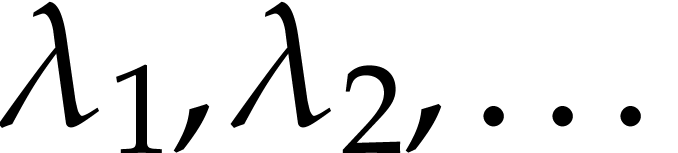 we will
reduce the general case to this favorable situation.
we will
reduce the general case to this favorable situation.
However, the generic shifts also introduce many
new constants in our field. An interesting question remains: how to
single out a differentially closed subfield of
which has the same constant field as ?
Acknowledgment. We are grateful to Gleb Pogudin and François Ollivier for helpful comments and suggestions.
Let be an algebraically closed field of
characteristic zero with the trivial derivation that turns every element
of into a constant. We will write 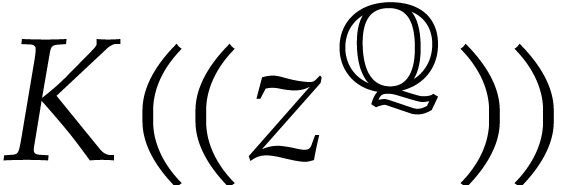 for the algebraically closed field of formal Puiseux
series in
for the algebraically closed field of formal Puiseux
series in  with coefficients in . For
  ,
let
,
let

We view 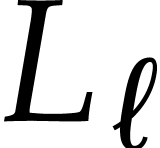 as a differential field with constant
field
as a differential field with constant
field 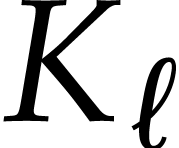 for the derivation
  . Setting
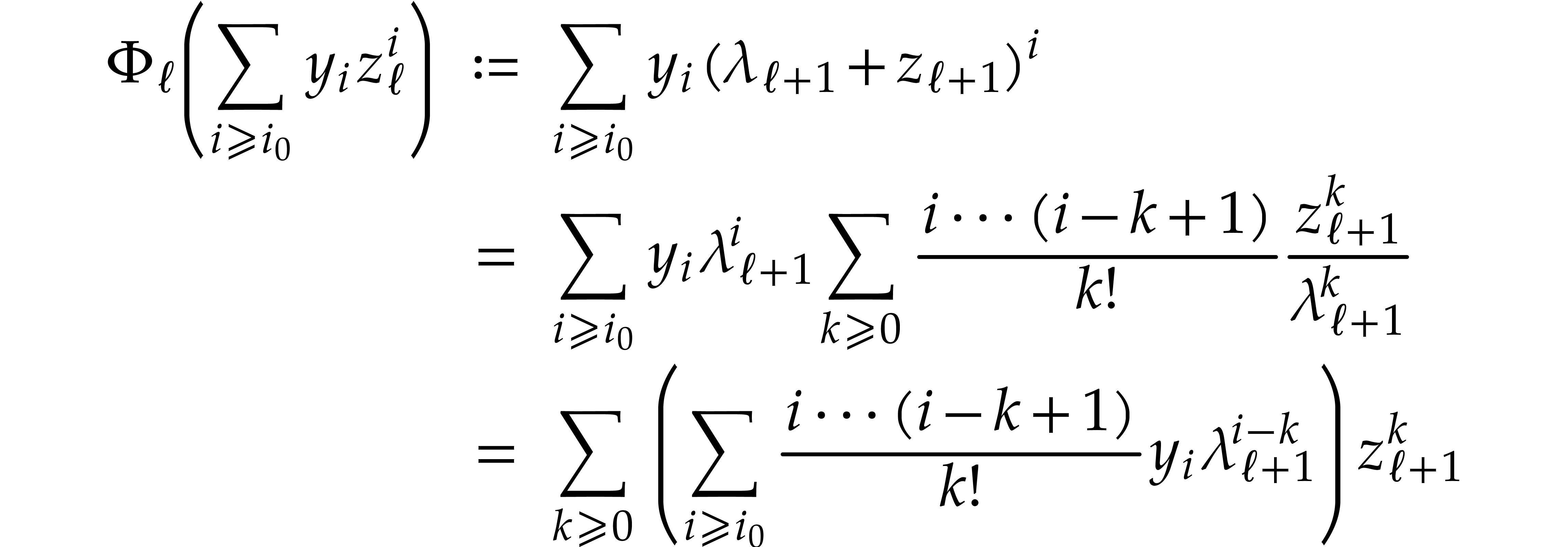
we define a differential field embedding
Note that
 |
(1) |
and that the evaluation at 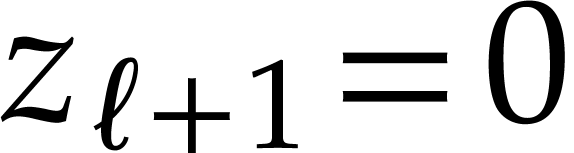 of
of 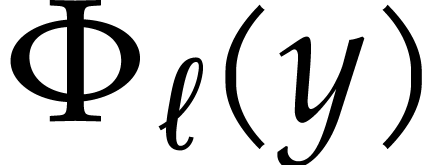 is non-zero for any non-zero
 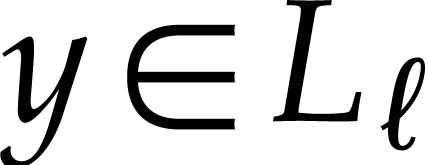 .
.
Regarding as being naturally included in 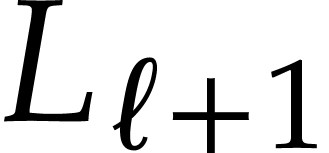 via the embedding
 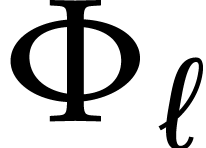 ,
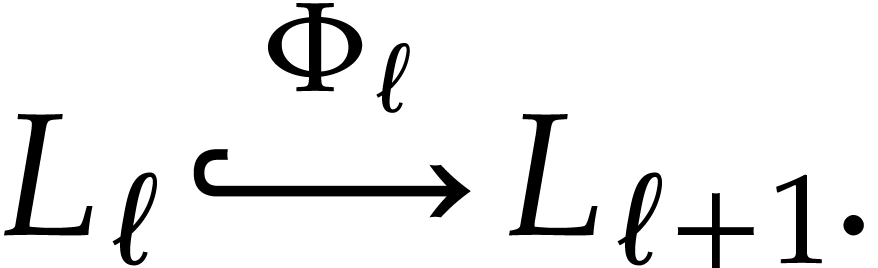
we have an infinite chain of inclusions
,
we have an infinite chain of inclusions

Now consider the differential field
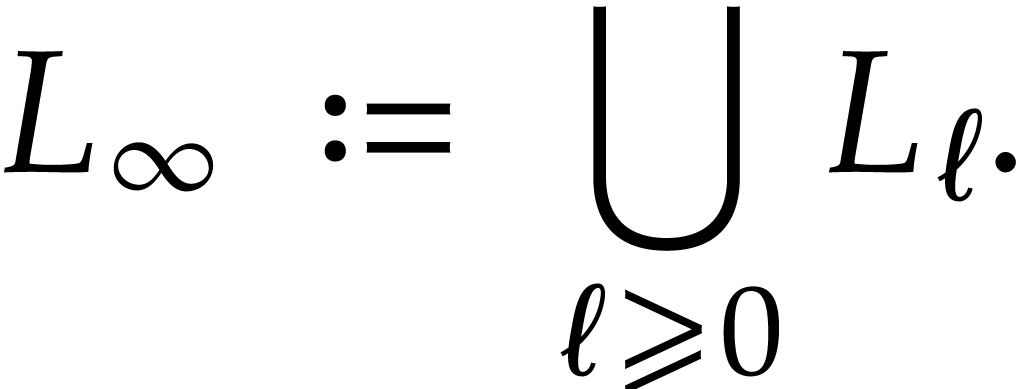 |
(2) |
Proof. The field 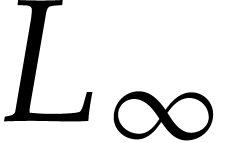 is
algebraically closed as an increasing union of algebraically closed
fields.
is
algebraically closed as an increasing union of algebraically closed
fields.
Consider two non-zero differential polynomials  of orders
  and
and 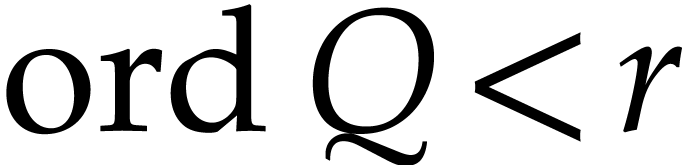 ,
respectively. We have to prove that there exists a
,
respectively. We have to prove that there exists a 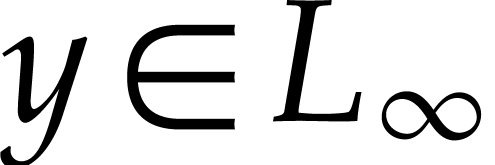 with and .
Since
with and .
Since 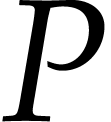 and
and 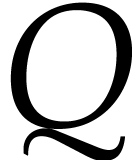 have finitely
many coefficients, we have
have finitely
many coefficients, we have  for some
 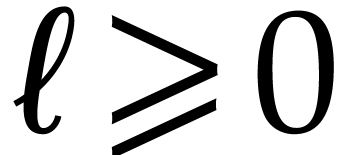 . Without loss of generality, we may assume
that is square-free as a polynomial
. Without loss of generality, we may assume
that is square-free as a polynomial  in
in 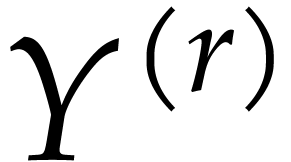 , where
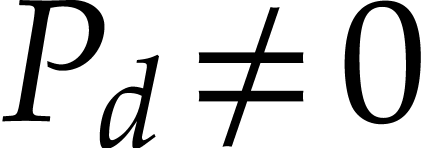 . So
. So  is non-zero, where
  denotes the separant of . Let
  ,
where
,
where 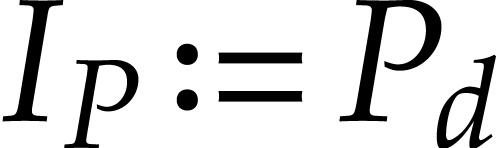 is the initial of . Hence
 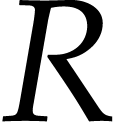 is a non-zero
element of
is a non-zero
element of  .
.
In view of (1), we may regard ,
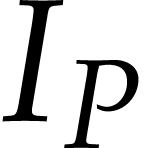 ,
, 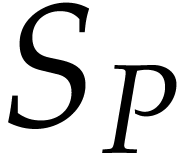 , and as elements of
  . Let
. Let  be
their evaluations at . Note
that
be
their evaluations at . Note
that  , so
, so  . Similarly,
  .
Consider
.
Consider  with
with  .
Since
.
Since 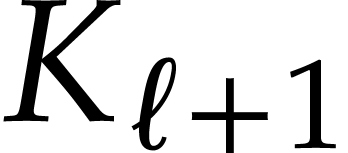 is algebraically closed and
  , there exists some
 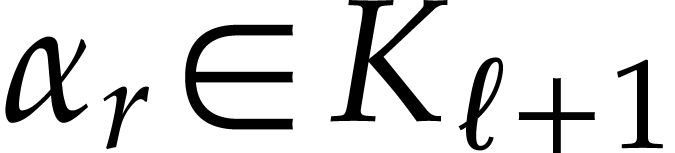 with
with  . By construction,
  , since otherwise
  would vanish.
Now consider the differential equation over  with initial conditions
  .
Since
.
Since  , this equation admits
a unique formal power series solution
, this equation admits
a unique formal power series solution  .
By construction, the valuation of
.
By construction, the valuation of 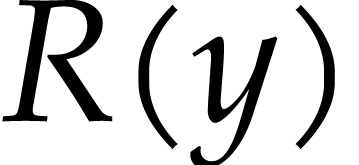 in
in 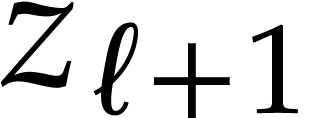 is zero, so .
This concludes our proof.
is zero, so .
This concludes our proof.
Remark is still far away from being
“the” differential closure of 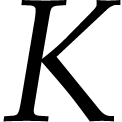 or
or
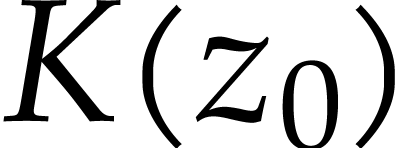 . First of all, is not d-algebraic over .
This problem can be addressed by constructing a sequence
. First of all, is not d-algebraic over .
This problem can be addressed by constructing a sequence 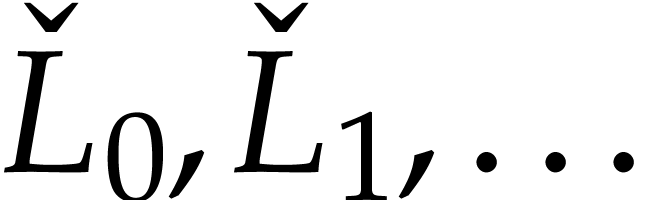 of differential subfields of
 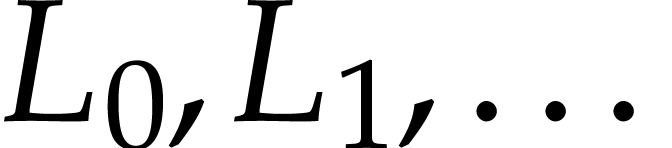 as
follows. We take
as
follows. We take 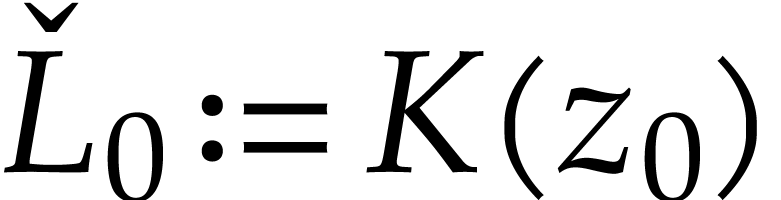 . Assuming
that
. Assuming
that 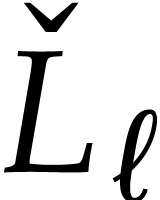 with constant field
 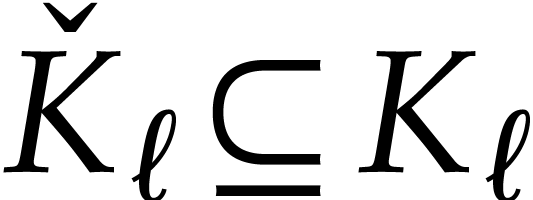 has been constructed, let
 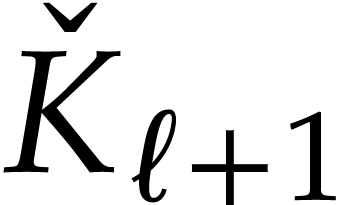 be the algebraic
closure of in which we substituted
be the algebraic
closure of in which we substituted 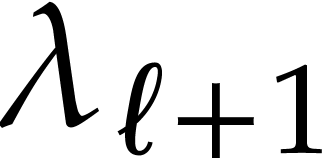 for
for 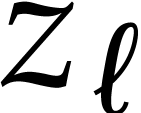 . Then we
let
. Then we
let 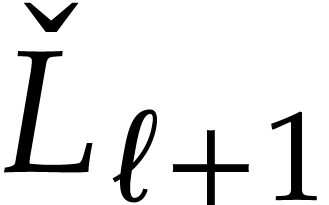 be the field of
  that
are d-algebraic over . The
same argument as in the above proof shows that
that
are d-algebraic over . The
same argument as in the above proof shows that 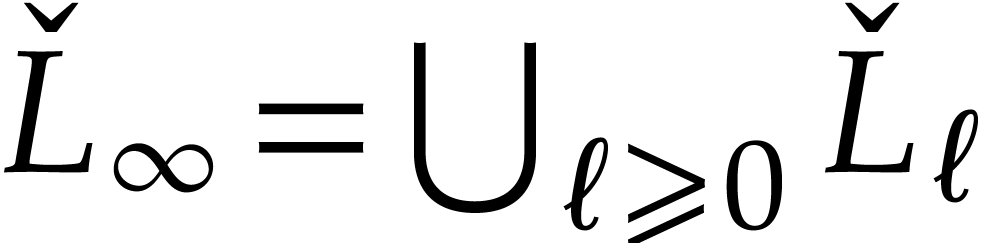 is differentially closed, but also d-algebraic over .
A second problem is that the constant fields  of
and
of
and 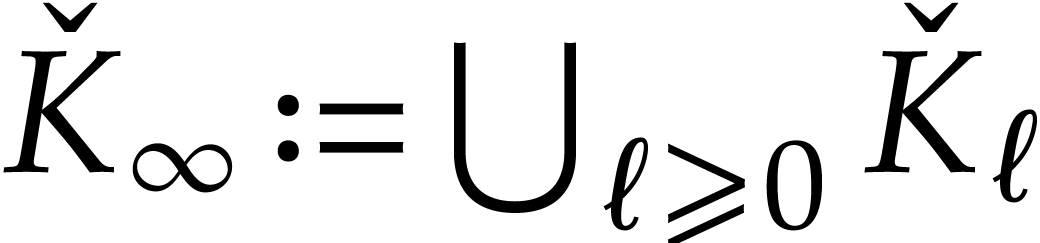 of
of 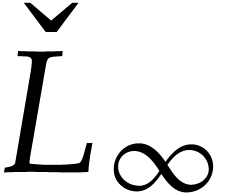 are much larger than . By
construction, we actually have a replica of
inside
are much larger than . By
construction, we actually have a replica of
inside 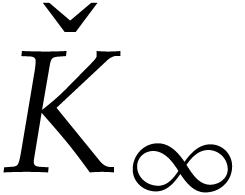 , since is a replica of inside for each
 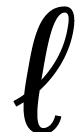 . This
suggests that the second problem may be related to the non-minimality of
differential closures [13, 17]. Even though
. This
suggests that the second problem may be related to the non-minimality of
differential closures [13, 17]. Even though
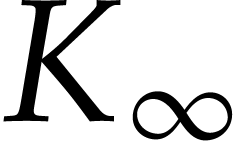 and are much larger than
, they still admit a very
explicit nature. In particular, elements of can
recursively be described as solutions of suitable differential equations
in .
and are much larger than
, they still admit a very
explicit nature. In particular, elements of can
recursively be described as solutions of suitable differential equations
in .
For the theorem from the previous section, we worked over an
algebraically closed constant field of
characteristic zero. In fact, there is a simple way [10,
§44.3] to embed an arbitrary differential field of characteristic
zero into a differential field of Puiseux series whose coefficients are
constants:
be a differential field of characteristic zero
and consider the map
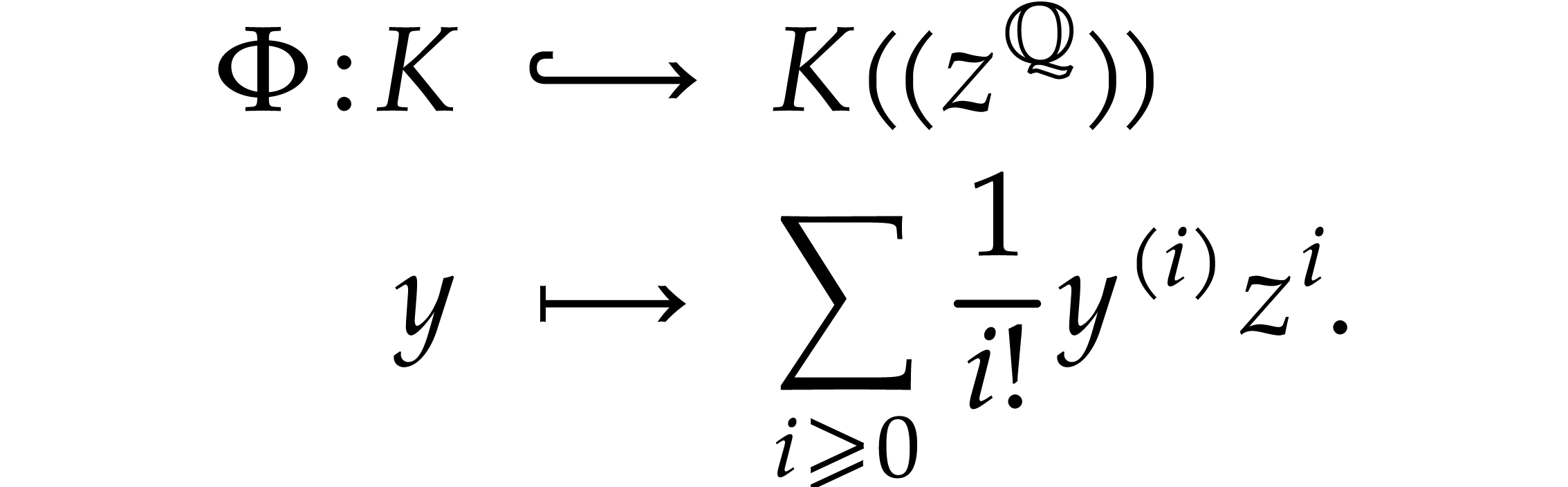
We define a derivation on by  . Then
 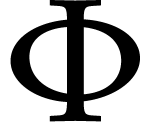 is an
embedding of differential fields.
is an
embedding of differential fields.
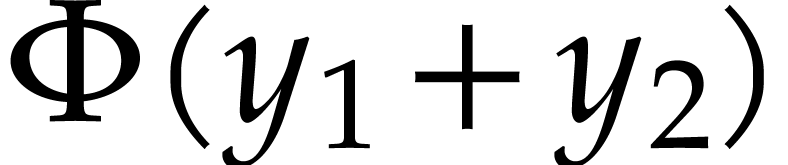
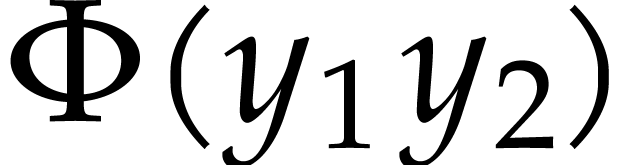
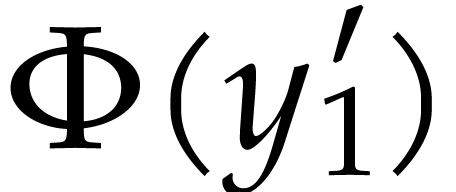
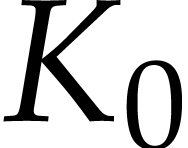
Proof. For 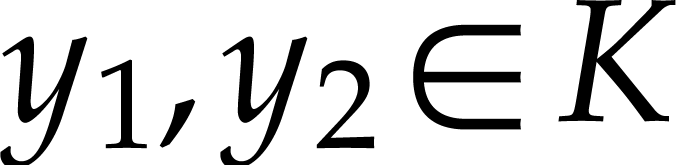 ,
one verifies that
,
one verifies that
 |
 |
 |
|
 |
|
 |
|
 |
|
 |
|
 be a differential field of characteristic
zero. Then can naturally be embedded into a
differentially closed field of the form
be a differential field of characteristic
zero. Then can naturally be embedded into a
differentially closed field of the form
Proof. Without loss of generality, we may assume
that is algebraically closed, since any
derivation on a field of characteristic zero canonically extends to its
algebraic closure. Using the lemma, we may embed
into 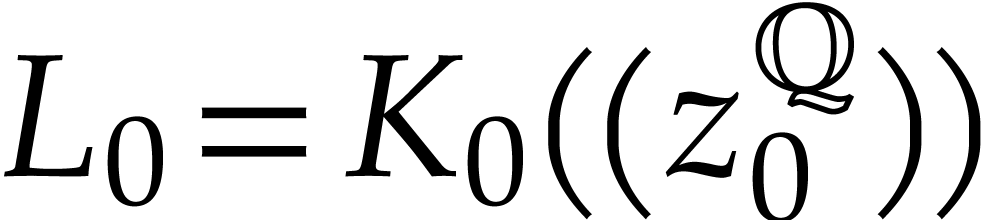 , where
becomes a field of constants when regarded as a differential subfield of
, where
becomes a field of constants when regarded as a differential subfield of
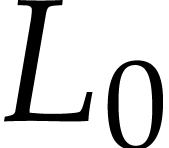 . This allows us to pursue
the construction of the previous section and successively embed
. This allows us to pursue
the construction of the previous section and successively embed  . We conclude by Theorem 1.
Remark  from the previous section by alternative ones. For instance, by
generalizing the construction from [4], we expect it to be
possible to construct fields of “complex transseries”
from the previous section by alternative ones. For instance, by
generalizing the construction from [4], we expect it to be
possible to construct fields of “complex transseries” 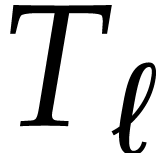 in over . Such a field would
contain and be closed under the resolution of
linear differential equations. Thanks to Lemma 3, we might
then let play the role of
in the construction of the previous section.
in over . Such a field would
contain and be closed under the resolution of
linear differential equations. Thanks to Lemma 3, we might
then let play the role of
in the construction of the previous section.
M. Aschenbrenner, L. van den Dries, and J. van der Hoeven. Asymptotic Differential Algebra and Model Theory of Transseries. Number 195 in Annals of Mathematics studies. Princeton University Press, 2017.
M. Aschenbrenner, L. van den Dries, and J. van der Hoeven. Maximal Hardy Fields. Arxiv, 2023. https://arxiv.org/pdf/2304.10846.pdf.
L. Blum. Generalized Algebraic Structures: Model Theoretic Approach. PhD thesis, MIT, 1968.
J. van der Hoeven. Complex transseries solutions to algebraic differential equations. Technical Report 2001-34, Univ. d'Orsay, 2001.
J. van der Hoeven. The Jolly Writer. Your Guide to GNU TeXmacs. Scypress, 2020.
J. van der Hoeven. Dendromorphic functions. Technical Report, HAL, 2025. https://hal.science/hal-05218462.
I. Kaplansky. An introduction to differential algebra. Hermann, 1957.
E. R. Kolchin. Differential algebra and algebraic groups. Academic Press, New York, 1973.
D. Pavlov, G. Pogudin, and Yu. P. Razmyslov. From algebra to analysis: new proofs of theorems by Ritt and Seidenberg. Proc. Amer. Math. Soc., 150:5085–5095, 2022.
Y. P. Razmyslov. Identities of Algebras and their Representations. Translations of Mathematical Monographs. AMS, 1994.
J. F. Ritt. Differential algebra. Amer. Math. Soc., New York, 1950.
A. Robinson. On the concept of a differentially closed field. Bulletin of the Research Council of Israel (Section F), 8F:113–128, 1959.
M. Rosenlicht. The nonminimality of the differential closure. Pacific J. Math., 52(2):529–537, 1974.
A. Seidenberg. An elimination theorem for differential algebra. Univ. California Publ. Math. (N.S.), pages 31–38, 1956.
A. Seidenberg. Abstract differential algebra and the analytic case. Proc. of the A.M.S., 9(1):159–164, 1958.
A. Seidenberg. Abstract differential algebra and the analytic case II. Proc. of the A.M.S., 23(3):689–691, 1969.
S. Shelah. Differentially closed fields. Israel J. of Math., 16:314–328, 1974.
S. Spodzieja. A geometric model of an arbitrary differentially closed field of characteristic zero. Transactions of the AMS, 374(1):663–686, 2021.