A zero-test for D-algebraic
transseries |
|
| draft version of February 6, 2026 |
|
C. S. Chen and H. Fang were partially supported by National Key R&D Programs of China (number 2023YFA1009401), the NSFC grants (number 12271511), and the Strategic Priority Research Program of the Chinese Academy of Sciences (number XDB05102). All authors were also supported by the International Partnership Program of Chinese Academy of Sciences (Grant number 167GJHZ2023001FN).
G. J. van der Hoeven has been supported by an ERC-2023-ADG grant for the ODELIX project (number 101142171).
 . This article has
been written using GNU TeXmacs [16].
. This article has
been written using GNU TeXmacs [16].
Abstract
Consider formal power series  that
are defined as the solutions of a system of polynomial differential
equations together with a sufficient number of initial conditions.
Given
that
are defined as the solutions of a system of polynomial differential
equations together with a sufficient number of initial conditions.
Given  , several algorithms
have been proposed in order to test whether
, several algorithms
have been proposed in order to test whether  . In this paper, we present such an algorithm for
the case where
. In this paper, we present such an algorithm for
the case where 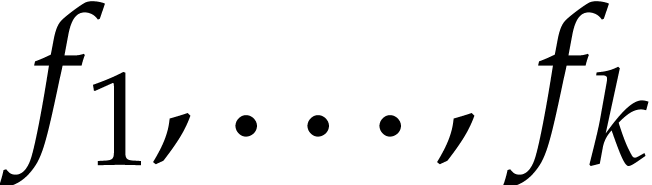 are so-called transseries
instead of power series.
are so-called transseries
instead of power series.
Keywords: D-algebraic transseries, zero-test, transseries, algorithm, solution
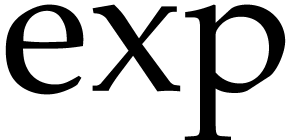
Standard mathematical notation exists for many special functions such as
 ,
, 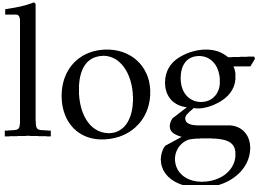 ,
, 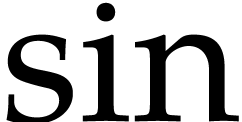 ,
, 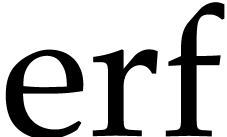 ,
, 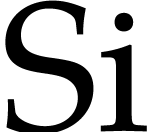 ,
,
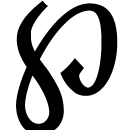 ,
, 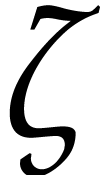 , etc. But how to decide whether an
expression like
, etc. But how to decide whether an
expression like  actually represents the zero
function?
actually represents the zero
function?
One popular approach is to rely on differential algebra [25,
20, 2], by defining as
a symbolic solution of the equation 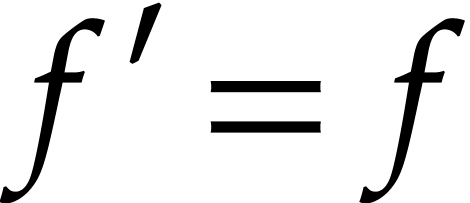 .
However, this only allows one to define up to a
multiplicative constant, which is insufficient to conclude that
.
However, this only allows one to define up to a
multiplicative constant, which is insufficient to conclude that  .
.
Another approach is to define 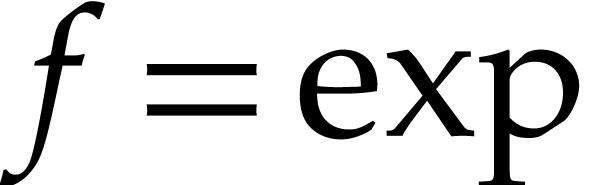 as the unique
solution of with
as the unique
solution of with 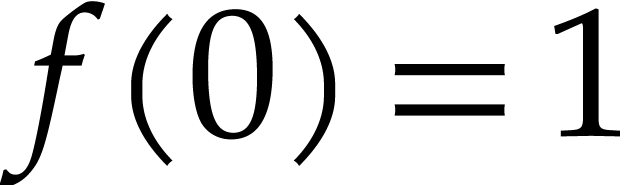 .
This can be made more precise by restricting our attention to
D-algebraic power series. Let
.
This can be made more precise by restricting our attention to
D-algebraic power series. Let 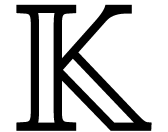 be an effective
field. We say that
be an effective
field. We say that 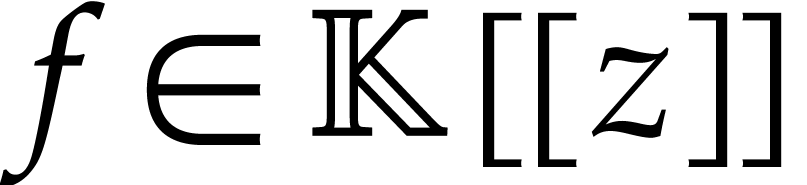 is D-algebraic if it
satisfies an equation
is D-algebraic if it
satisfies an equation  for some differential
polynomial
for some differential
polynomial  . In that case,
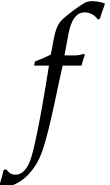 is actually uniquely determined by
 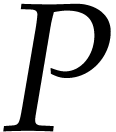 and a sufficient number of initial conditions. Given
D-algebraic series and a differential polynomial
and a sufficient number of initial conditions. Given
D-algebraic series and a differential polynomial
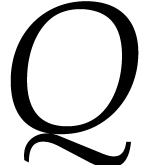 in
in 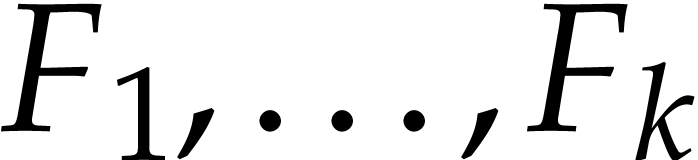 ,
the zero-test problem now consists of deciding whether
,
the zero-test problem now consists of deciding whether  . Many solutions have been proposed
for this problem [24, 5, 6, 19, 26, 27, 22, 17, 15] and we refer to [12] for a
brief overview of existing approaches.
. Many solutions have been proposed
for this problem [24, 5, 6, 19, 26, 27, 22, 17, 15] and we refer to [12] for a
brief overview of existing approaches.
However, one problem with ordinary power series is that they do not form
a field. So-called transseries are a far reaching
generalization of power series, by closing off 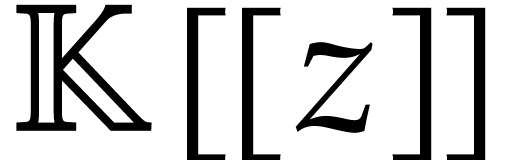 under exponentiation, logarithms, and infinite summation [4,
8, 7, 14]. An example of a
transseries at infinity (
under exponentiation, logarithms, and infinite summation [4,
8, 7, 14]. An example of a
transseries at infinity ( ) is
) is
 |
(1) |
The transseries with real coefficients form a field 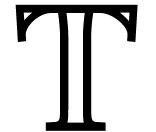 that is closed under differentiation, composition and the resolution of
many differential equations. A transseries is
again said to be D-algebraic if for
some
that is closed under differentiation, composition and the resolution of
many differential equations. A transseries is
again said to be D-algebraic if for
some  . For example, the
transseries (1) is D-algebraic.
. For example, the
transseries (1) is D-algebraic.
Given D-algebraic transseries and a differential
polynomial in ,
our main result is an algorithm for deciding whether . In fact, we reduce this problem to the case
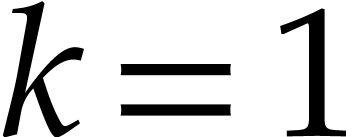 , but at the same time
generalize it to the case where the coefficients of
and the differential polynomial with
, but at the same time
generalize it to the case where the coefficients of
and the differential polynomial with 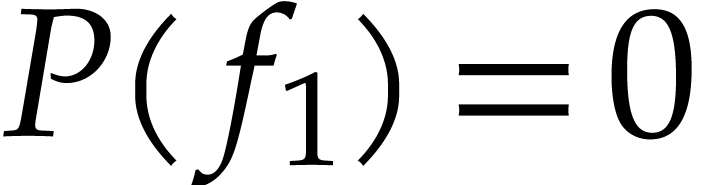 are taken in an effective differential subfield of for which we already have a zero-test.
A substantial part of the paper is devoted to recalling required
theoretical results about transseries from [14, 11,
1]. From an effective point of view, computations with
transseries are most conveniently carried out with respect to a
so-called transbasis  .
This allows one to consider general transseries as power series in
.
This allows one to consider general transseries as power series in 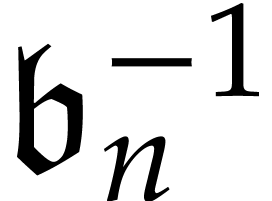 with real exponents, and whose coefficients can
recursively be expanded with respect to the transbasis
with real exponents, and whose coefficients can
recursively be expanded with respect to the transbasis  . For instance, for , the transseries
  is a
series in
is a
series in 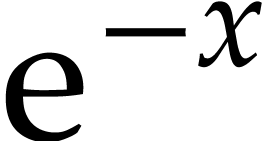 with coefficients in
 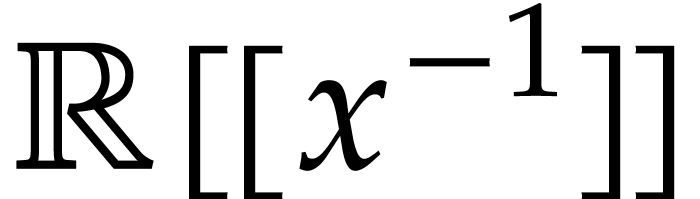 . Along with our survey, we present a precise
framework, much in the vein of [23, 10].
. Along with our survey, we present a precise
framework, much in the vein of [23, 10].
Having carried out the necessary preparations, our main algorithm turns
out to be a natural extension of the zero-test from [15]
for formal power series. Using a theorem from [11], we were
also able to further sharpen the bound on the required expansion order.
As an illustration of our algorithm, we will first define the Lambert
function as the unique transseries solution to a suitable asymptotic
differential equation and then verify that it satisfies the equation
 .
.
Let 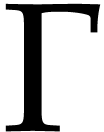 be a totally ordered abelian group. A subset
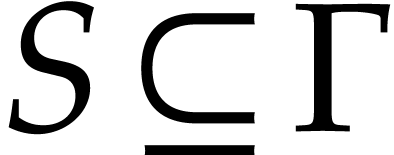 is said to be grid-based if there exist
 and
and 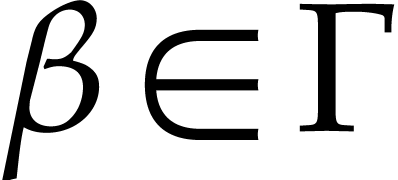 with
with

Given a field , consider a
formal power series  with
with 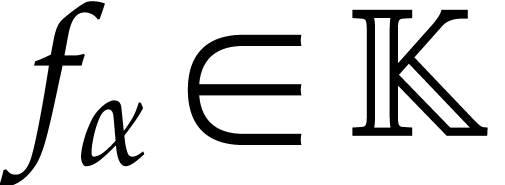 and such that the support
  is grid-based. Then we
call a grid-based power series (with
coefficients in and exponents in ) and we denote the set of such series by
is grid-based. Then we
call a grid-based power series (with
coefficients in and exponents in ) and we denote the set of such series by 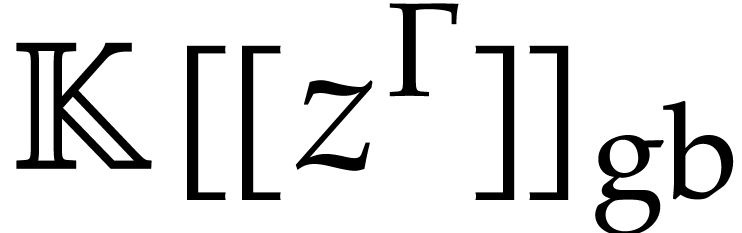 or simply by
 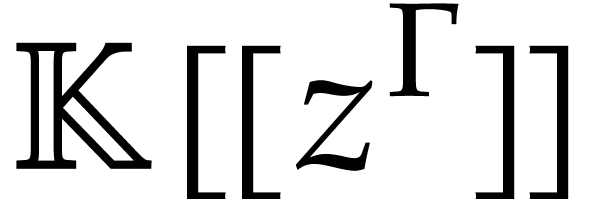 .
.
In [14, Section 2.2] it is shown that
forms a field. It actually forms a valued field for the valuation  defined by
  (and
(and  ). If
). If 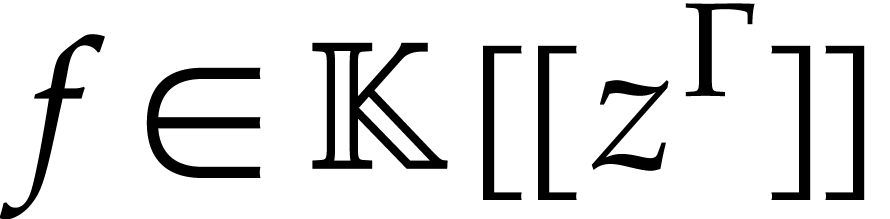 is non-zero, then
we call
is non-zero, then
we call 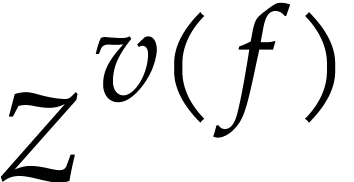 the dominant monomial of . If is an
ordered field, then so is ,
by setting
the dominant monomial of . If is an
ordered field, then so is ,
by setting  . In that case, we
will write
. In that case, we
will write 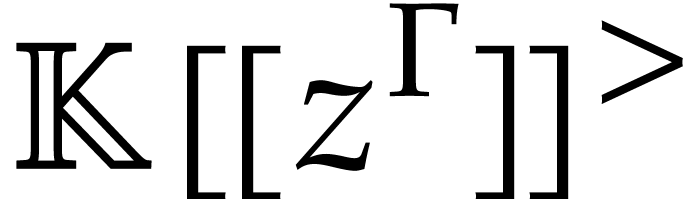 for the subset of strictly positive
elements.
for the subset of strictly positive
elements.
Example  with
with  .
.
Example 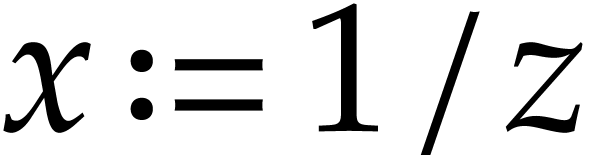 is
a “formal infinitely large variable”, then we define
is
a “formal infinitely large variable”, then we define 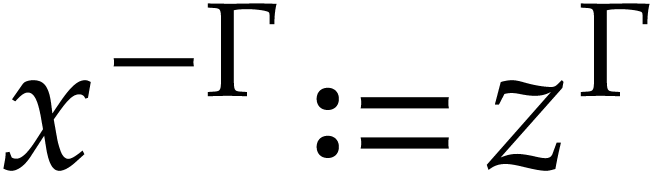 and
and  .
.
Given variables  and
and  , let
, let  .
We totally order
.
We totally order 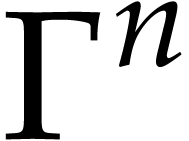 anti-lexicographically via

and define the field of grid-based iterated series in by  . We note
that
. We note
that  and this inclusion is strict as soon as
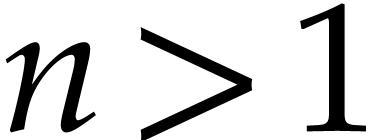 : e.g.,
  . Note also that
  with
with  .
.
We will sometimes consider series  in
in  jointly with respect to all variables
and write
jointly with respect to all variables
and write  for its valuation. On other occasions,
we expand
for its valuation. On other occasions,
we expand  as a series in
 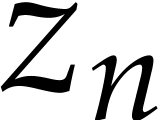 with coefficients
  and write
  for its valuation in .
2.3Asymptotic relations and the canonical decomposition of a series
Given 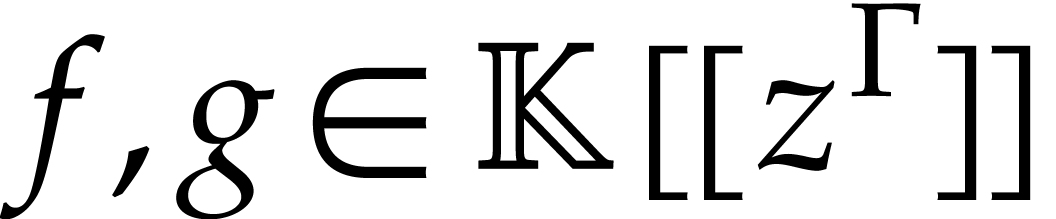 , we will use the
following traditional asymptotic notation:
, we will use the
following traditional asymptotic notation:
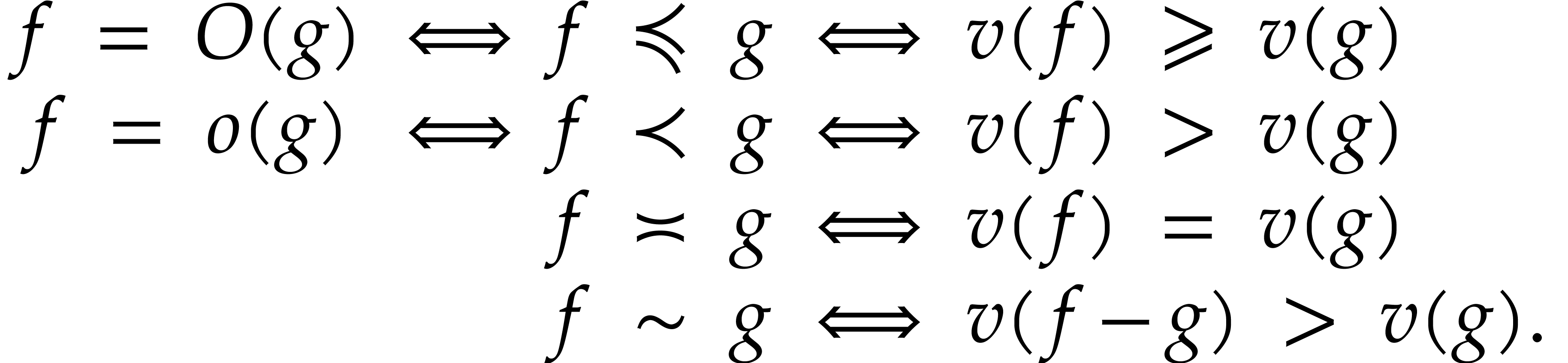
For elements  in the value group (or infinity),
we also write
in the value group (or infinity),
we also write 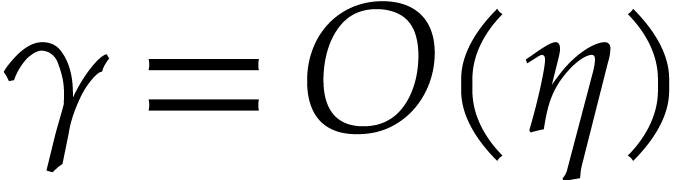 if
if 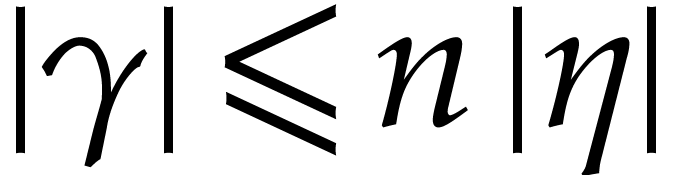 for
some integer
for
some integer 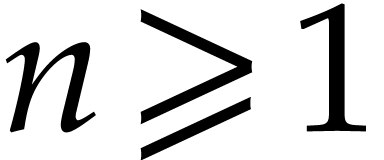 and
and 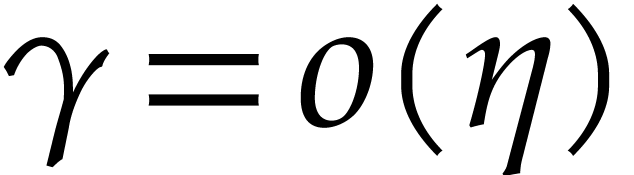 if
if 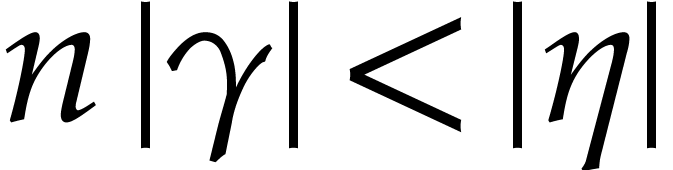 for all integers .
The following asymptotic relations will also be useful:
for all integers .
The following asymptotic relations will also be useful:

Any grid-based series admits a unique
canonical decomposition

where  ,
, 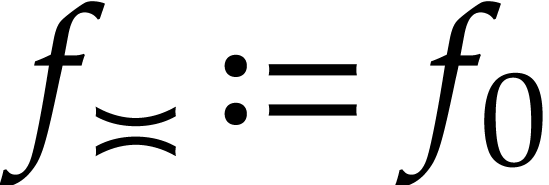 , and
, and  .
We define
.
We define  and
and  .
.
A field is said to be effective if we
have algorithms for the field operations and zero testing. An ordered
field is effective if we also have an algorithm for the ordering. Assume
that is effective and that 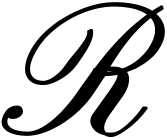 is an effective ordered subfield of
 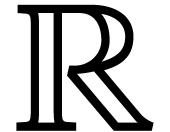 .
.
We recursively define a lazy power series with coefficients in
and exponents in as an
algorithm that takes no input and that either
produces zero or a pair 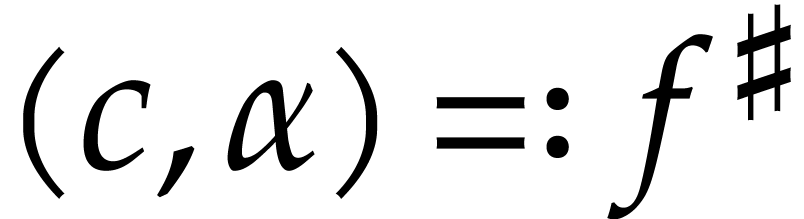 with
with 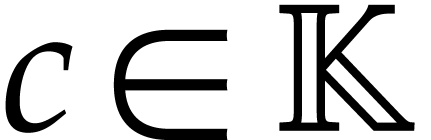 and
and 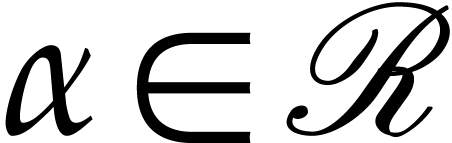 , as well as another lazy
power series
, as well as another lazy
power series 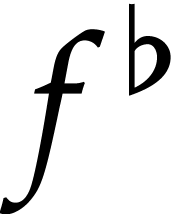 . The pair
 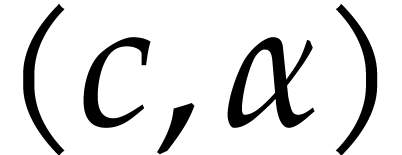 actually represents a term
 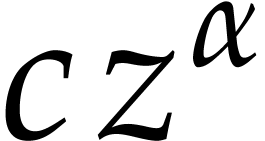 and we will use this latter notation in the sequel. Writing
 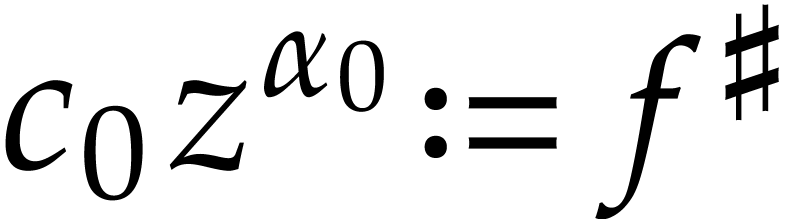 ,
, 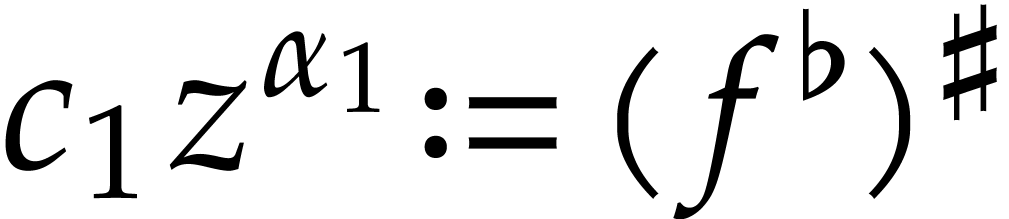 ,
,
 ,
,  , where the sequence stops whenever
 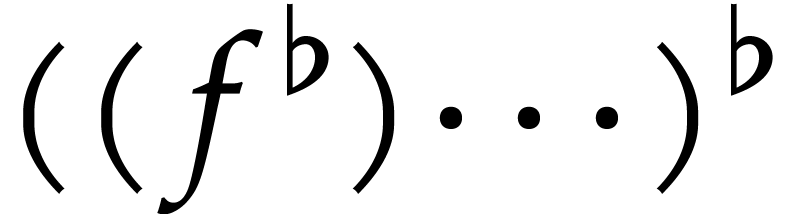 produces zero, we allow coefficients
 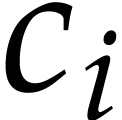 to be zero,
but we require that
to be zero,
but we require that  is a grid-based subset of
. We may thus regard as a grid-based series
is a grid-based subset of
. We may thus regard as a grid-based series  .
Conversely, a series
.
Conversely, a series 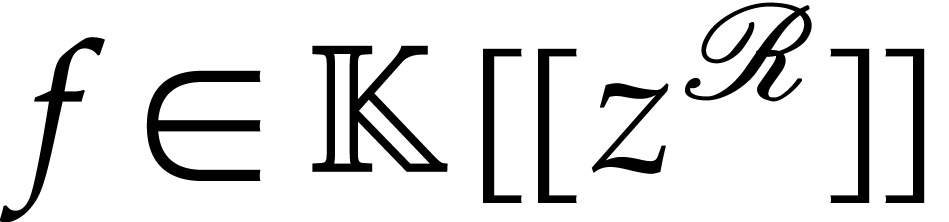 is said to be
computable if it can be computed as a lazy power series. We
write
is said to be
computable if it can be computed as a lazy power series. We
write 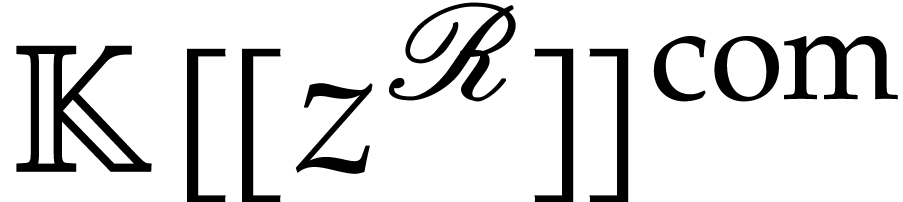 for the set of such series.
In fact, forms a field and the lazy approach
allows us to implement the ring operations in an elegant way as follows:
given  and non-zero
  with
with
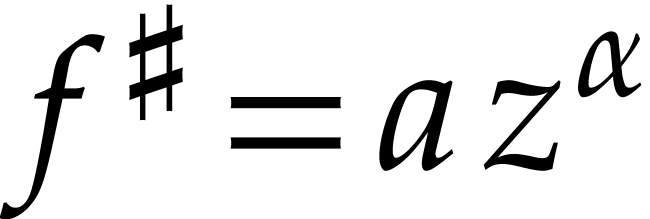 and
and 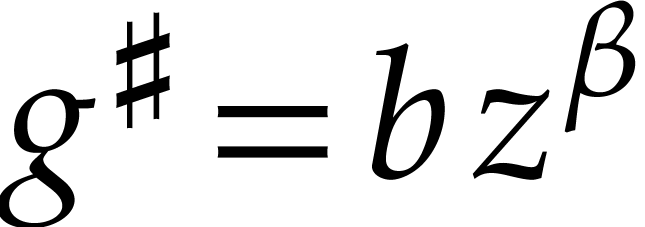 ,
we set
,
we set
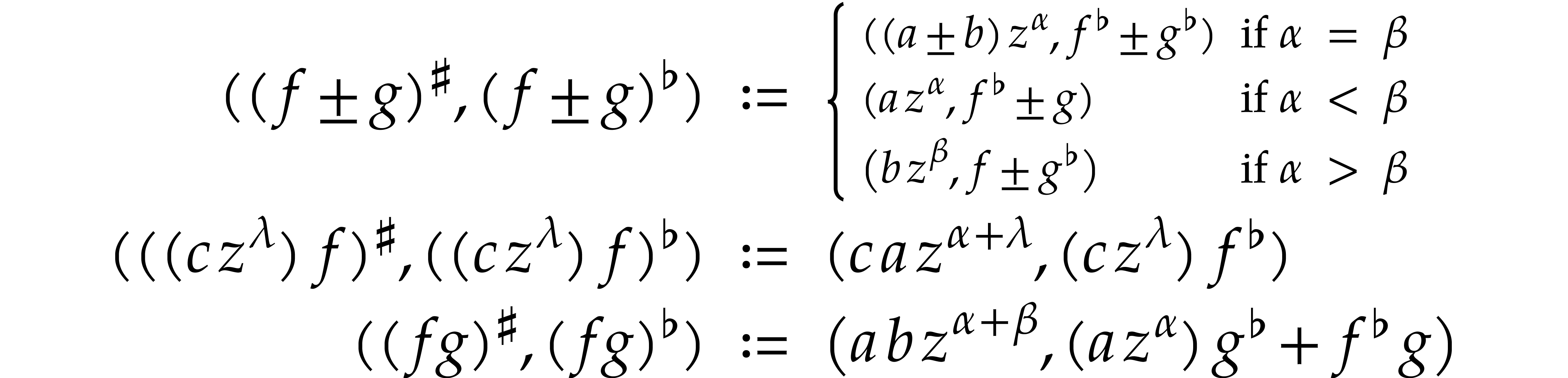
We also take 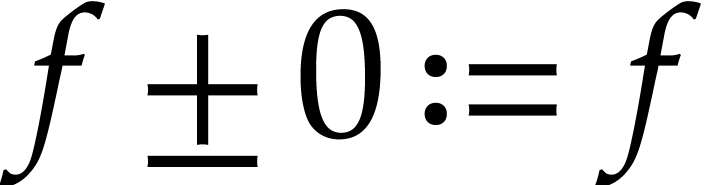 ,
,  , etc. Assuming that
 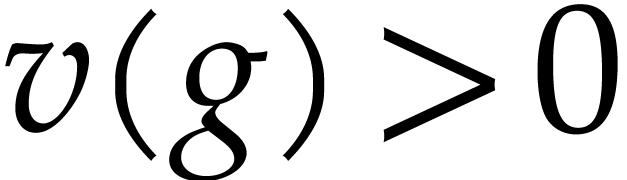 , we invert
 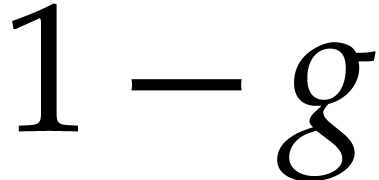 as follows

Since any non-zero  can be written as
  with
with 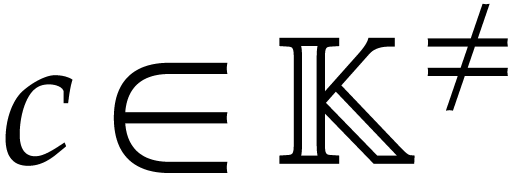 , , and
  with
, we may thus compute
with
, we may thus compute 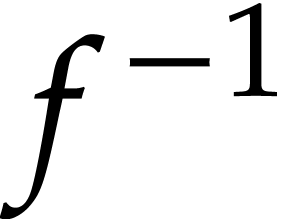 as
as 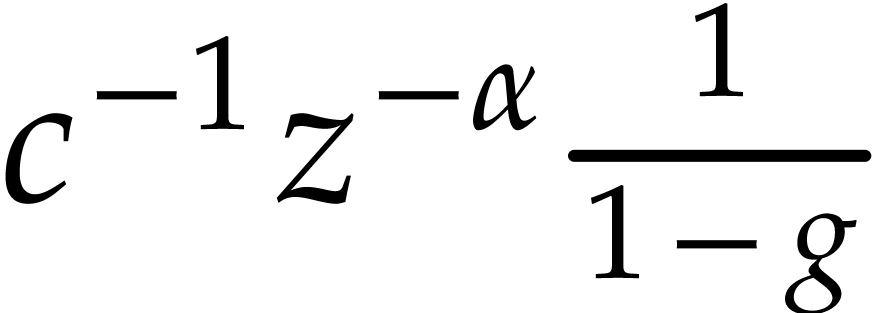 .
.
The lazy approach is very convenient as long as we only need a modest number of terms. For high order expansions, the relaxed (or online) approach is more efficient [13].
Assume now that is an effective field and that
is an effective ordered subfield of . In the case of iterated series in  , the lazy approach raises the
problem of infinite cancellations: assume that we wish to subtract
, the lazy approach raises the
problem of infinite cancellations: assume that we wish to subtract
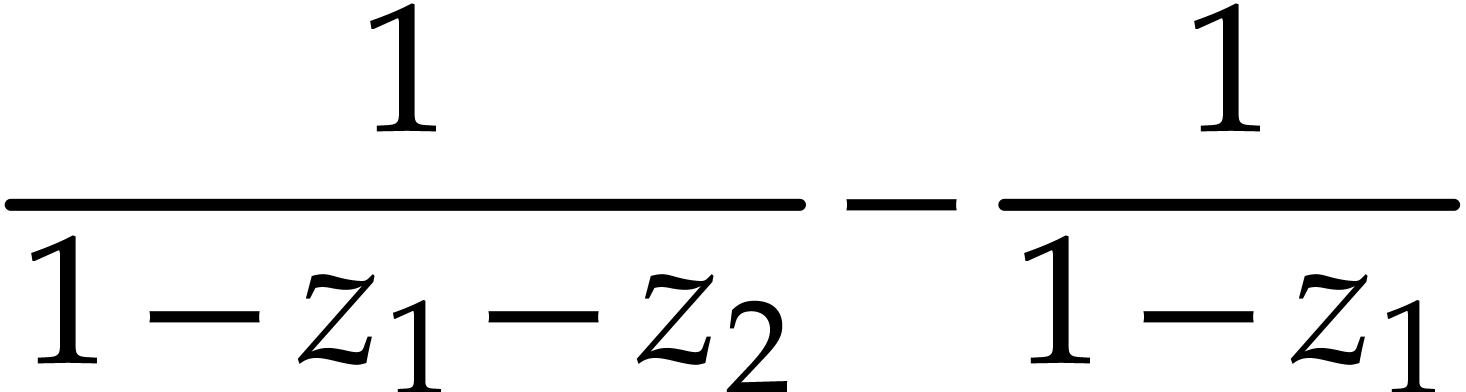 |
(2) |
using the lazy approach. Then the successive terms of the result are
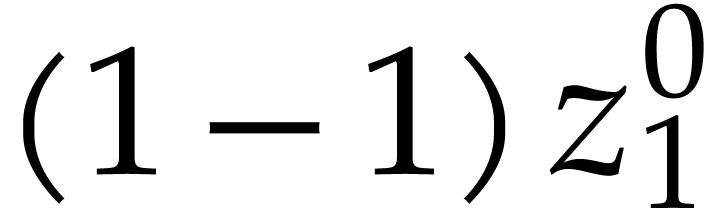 ,
, 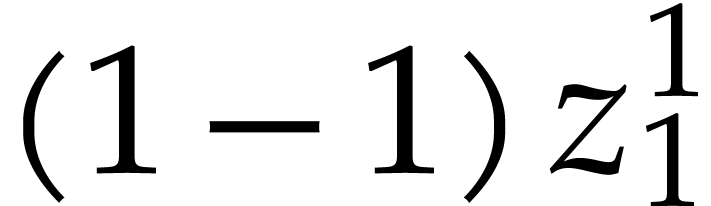 ,
, 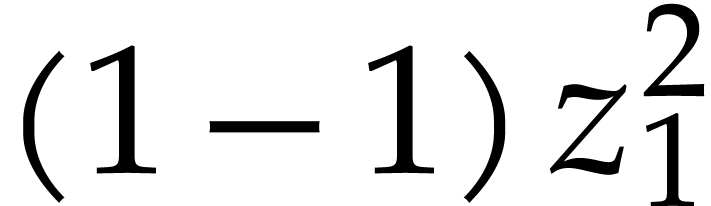 , . Due to this infinite
cancellation, we never reach the first term
, . Due to this infinite
cancellation, we never reach the first term 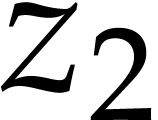 of
the result.
of
the result.
In order to circumvent this difficulty, assume that we are given an
effective subfield 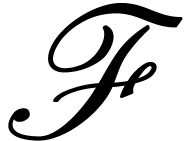 of
of  such that
  . We will call an ambient field if for any
  with
with 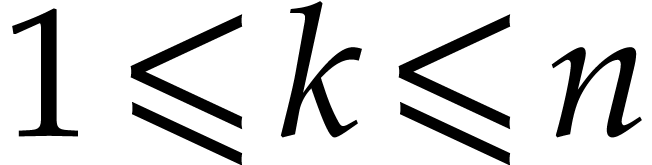 , when regarding
  as a series in
  ,
we have
,
we have 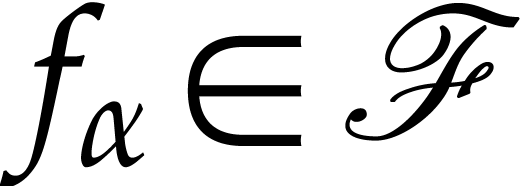 for all and
 .
.
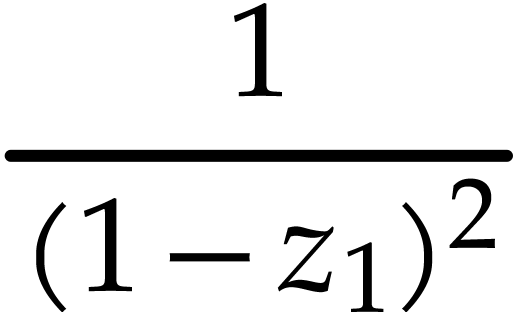
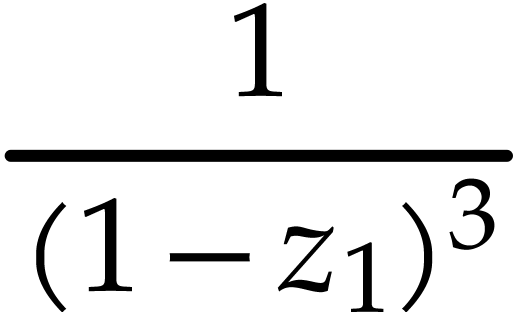
In the example (2) we may then take  , after which expansion with respect to yields

and the coefficients 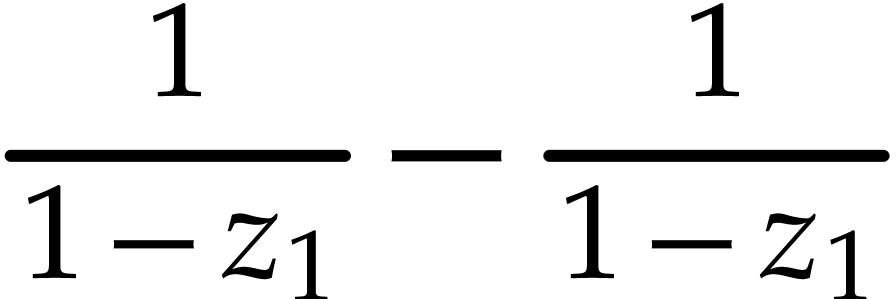 ,
,  ,
,  ,
are all in .
In particular, we may detect the infinite cancellation in the first term
using the zero test in .
,
are all in .
In particular, we may detect the infinite cancellation in the first term
using the zero test in .
In this paper, we adopted the framework of grid-based series in order to use some of the results from [14]. However, the results from this book and the present paper can be adapted mutatis mutandis to so called steady series.
We say that a subset 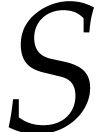 of
is steady if is either finite or
of
is steady if is either finite or  with
with  and
and  . It was shown by Levi-Civita [21]
that the set
. It was shown by Levi-Civita [21]
that the set 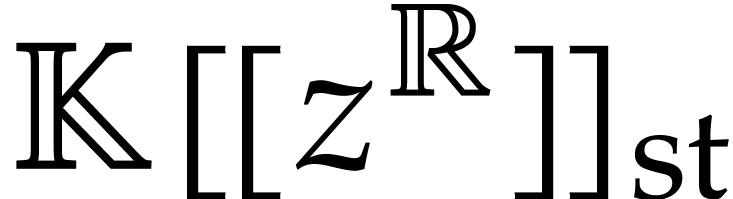 of series
  with steady support forms a field. An example of such a steady series
that is not grid-based is
with steady support forms a field. An example of such a steady series
that is not grid-based is  .
.
The field of iterated steady series is simply  . In fact, the framework of steady series would
have been slightly better for the present paper, since it is the most
natural setting for lazy power series expansions. Furthermore, we have
seen that a series in
. In fact, the framework of steady series would
have been slightly better for the present paper, since it is the most
natural setting for lazy power series expansions. Furthermore, we have
seen that a series in  is not necessarily
grid-based, so extra efforts are sometimes required to prove this,
whenever this indeed is the case.
is not necessarily
grid-based, so extra efforts are sometimes required to prove this,
whenever this indeed is the case.
Even more generally, Hahn showed that the set 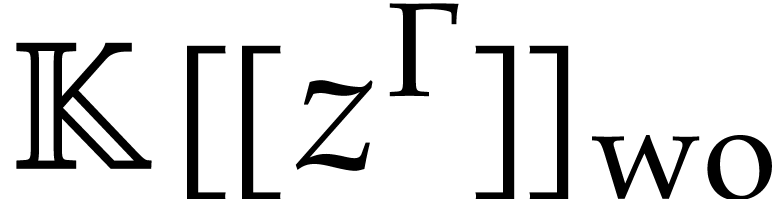 of
series with well-ordered support also forms a
field. In this setting, we naturally have
of
series with well-ordered support also forms a
field. In this setting, we naturally have  .
An example of a well-ordered series that is not steady is
.
An example of a well-ordered series that is not steady is  , which is a natural solution of the equation
 . However, this kind of
series is more problematic from an algorithmic point of view, since the
order type of the support of
. However, this kind of
series is more problematic from an algorithmic point of view, since the
order type of the support of  is
is 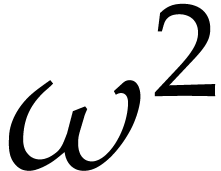 . In particular, expressions like
 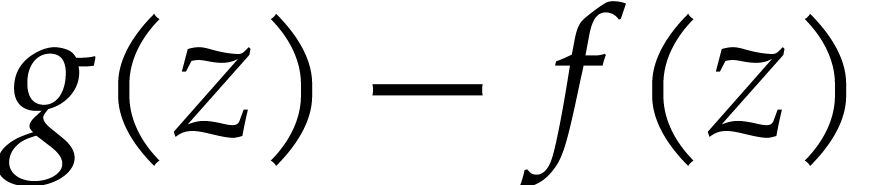 give rise to infinite cancellations as in (2),
but with no easy fix; see also [9].
give rise to infinite cancellations as in (2),
but with no easy fix; see also [9].
Let  be a formal variable that we think of as
being infinitely large. Given
be a formal variable that we think of as
being infinitely large. Given 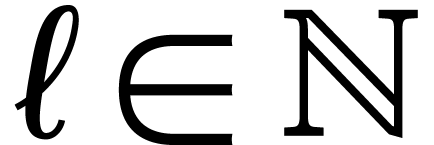 ,
let
,
let  denote the
 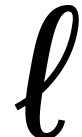 -fold
iterated logarithm. A transbasis is a tuple
-fold
iterated logarithm. A transbasis is a tuple  with the following properties:
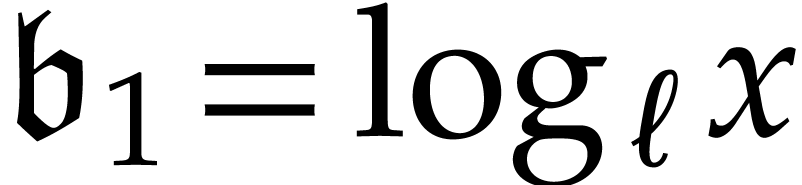 for some .
 for
for  .
.
 .
.
In TB2, we understand that  consists of the multiplicative group of formal exponentials
 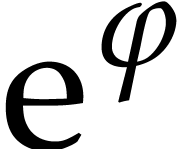 with
with  and
and 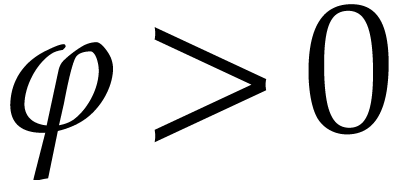 . Accordingly, in TB3, we have
written
. Accordingly, in TB3, we have
written 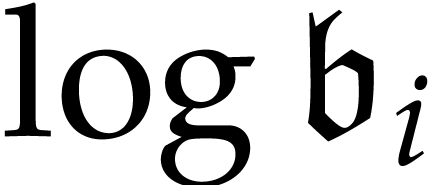 for the series
 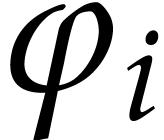 with
with 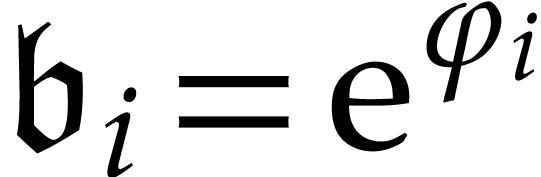 .
.
We may always insert further iterated logarithms into 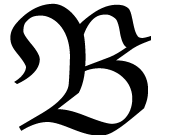 whenever needed. More precisely, the tuple
  with
with
 is again a transbasis. In the extension
  , TB3 can be strengthened to
 |
(3) |
Example  forms a transbasis, since
 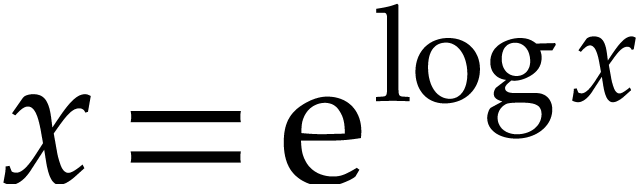 ,
,
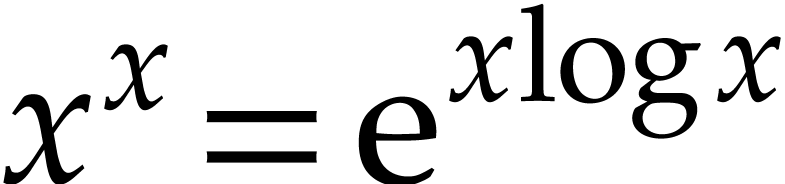 with
with  ,
and
,
and  .
.
Remark 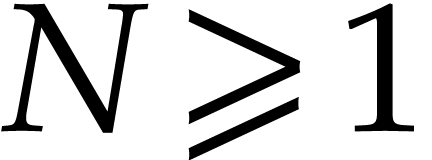 be
a positive integer. Then
be
a positive integer. Then

where  is a transbasis. If
 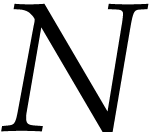 is large, then the expression
  becomes very
large, which is not convenient. There are various other types of
transbasis, for which
becomes very
large, which is not convenient. There are various other types of
transbasis, for which 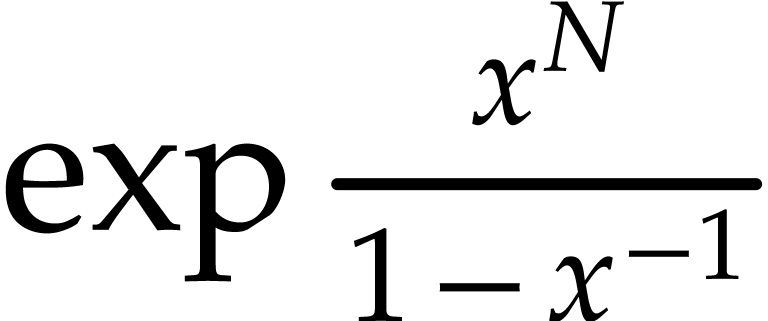 may directly be included
in the transbasis instead of
may directly be included
in the transbasis instead of  .
In this paper, we will ignore such “optimizations” and refer
to [14, Section 4.4] for more details on alternative
definitions.
.
In this paper, we will ignore such “optimizations” and refer
to [14, Section 4.4] for more details on alternative
definitions.
A grid-based transseries is an element of  for some transbasis . It
turns out that the grid-based transseries form a field
(modulo natural identifications when varying ). This is not directly obvious from our
“definition”, which depends on the underlying transbasis
. Usually, one first defines
the field of transseries in a more conceptual
manner and then proves that any transseries can be expanded with respect
to a transbasis: see [14, Chapter 4 and Section 4.4].
However, in this paper, we will always manipulate transseries via
transbasis, so our more computational “definition” will be
more direct and convenient.
for some transbasis . It
turns out that the grid-based transseries form a field
(modulo natural identifications when varying ). This is not directly obvious from our
“definition”, which depends on the underlying transbasis
. Usually, one first defines
the field of transseries in a more conceptual
manner and then proves that any transseries can be expanded with respect
to a transbasis: see [14, Chapter 4 and Section 4.4].
However, in this paper, we will always manipulate transseries via
transbasis, so our more computational “definition” will be
more direct and convenient.
Grid-based transseries were first considered by Écalle in [7]. For constructions of fields of transseries with well-ordered support, we refer to [1, Appendix A] or [4, 10].
3.3Differentiation of transseries
Consider a transbasis with . Then we have the natural derivation  on
on 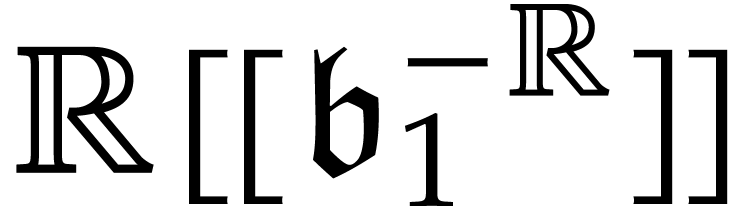 , with
  for all
 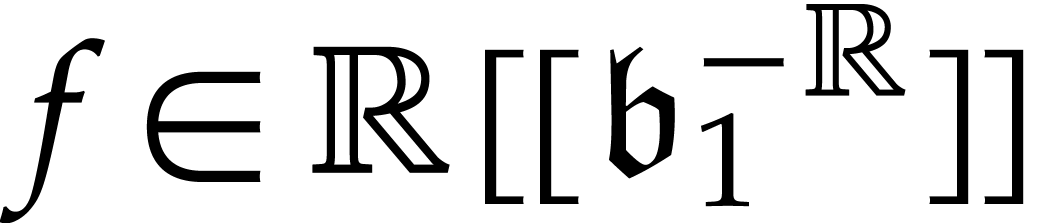 .
This derivation extends by induction on
.
This derivation extends by induction on 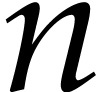 to
to  : assuming that we defined
 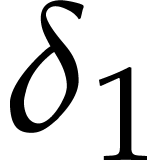 on
on  , we
can in particular compute
, we
can in particular compute  .
Now given
.
Now given  , we take

If  , then it can be shown
that
, then it can be shown
that  . This is due to the
fact that, for a suitable notion of infinite summation, we have
. This is due to the
fact that, for a suitable notion of infinite summation, we have
 |
(4) |
with  . For details, see [14, Sections 2.4 and 5.1].
Assuming that  all belong to , it follows that
 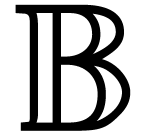 is
also closed under the usual differentiation with respect to . In addition, for , we have the derivation
is
also closed under the usual differentiation with respect to . In addition, for , we have the derivation  with
with 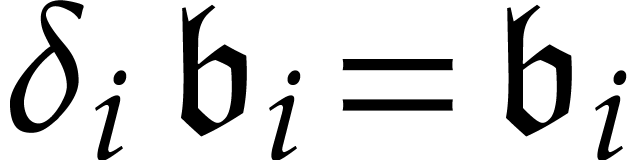 . Given
 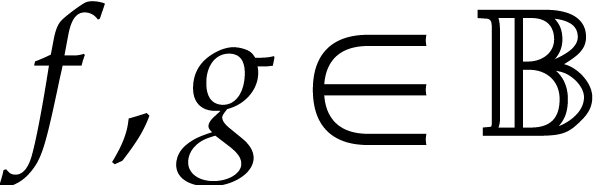 , it is shown in [14, Section 5.1]
that
, it is shown in [14, Section 5.1]
that
 |
(5) |
Applying this to Equation
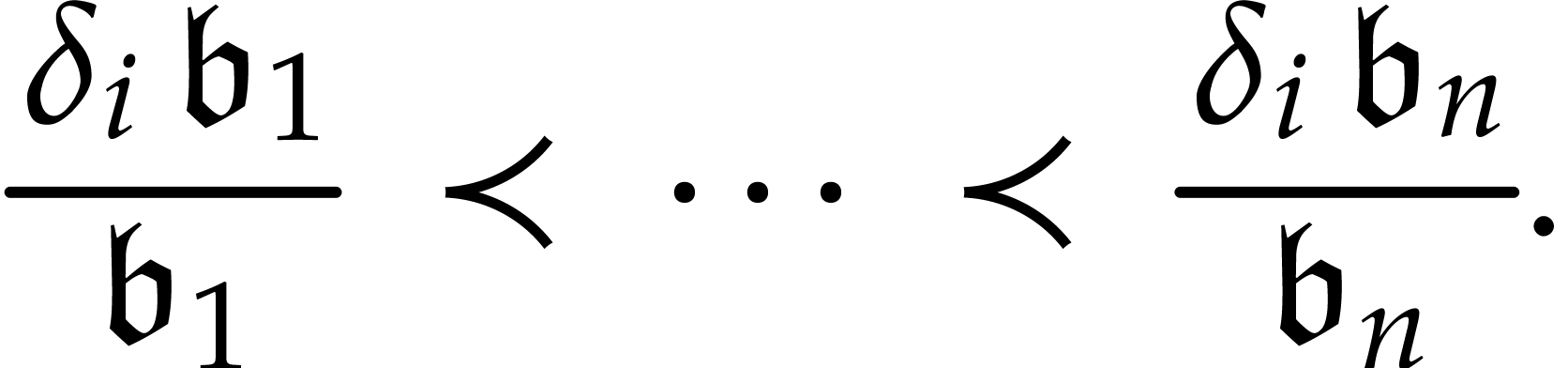 |
(6) |
Given , the formula (4)
implies  , since
  . For any
 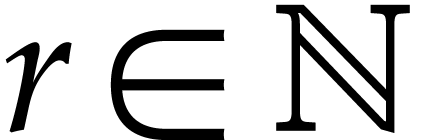 ,
it follows that
,
it follows that  . If has dominant monomial
 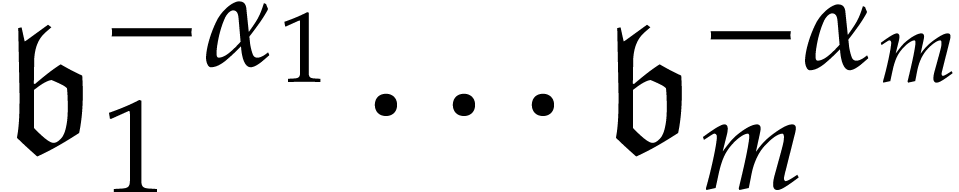 with
with
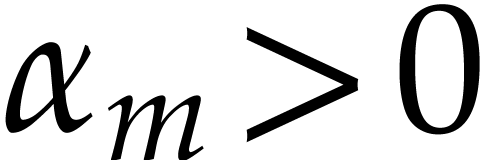 , this also yields
 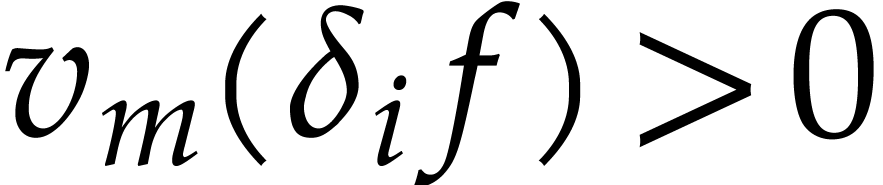 , whence
 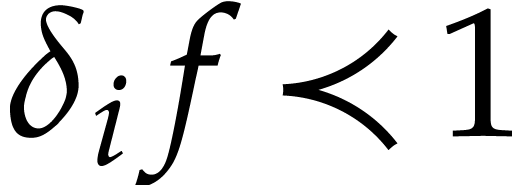 . For all
 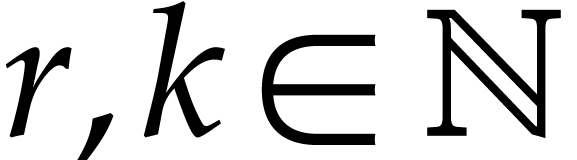 ,
we thus obtain
,
we thus obtain
 |
(7) |
Let be an effective ordered subfield of and let  be an ambient field.
We call a differential ambient field if
be an ambient field.
We call a differential ambient field if
 and is effectively
closed under .
Differentiation can be implemented in a lazy manner: given a non-zero
and is effectively
closed under .
Differentiation can be implemented in a lazy manner: given a non-zero
 with
with 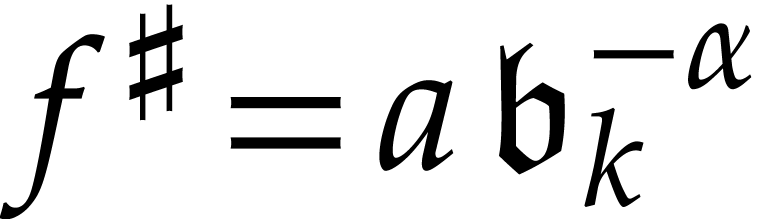 (when regarded as a
lazy series in
(when regarded as a
lazy series in 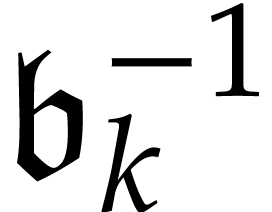 ), we may take

where 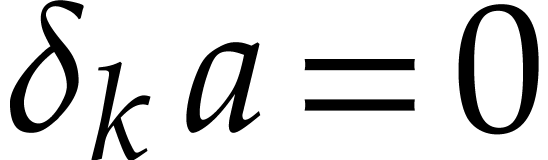 if and
 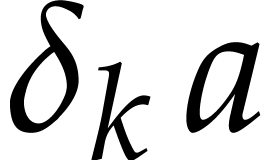 can be expanded recursively as
  with respect to
 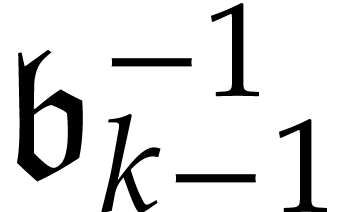 if
if 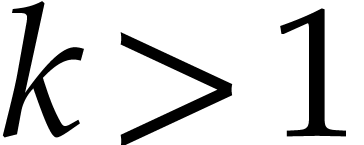 .
.
We already noted that is a transbasis for 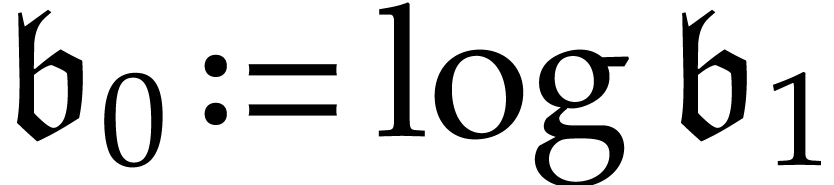 . Moreover,
  is again a differential ambient field for
 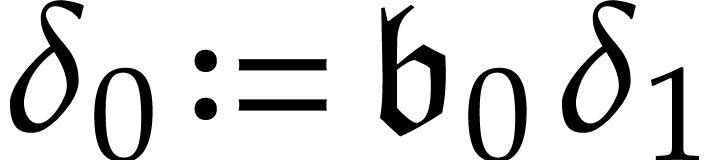 .
Indeed,
.
Indeed,  and the lazy algorithms for the field
operations allow us to compute the iterated coefficients of any
transseries in the field generated by
and the lazy algorithms for the field
operations allow us to compute the iterated coefficients of any
transseries in the field generated by 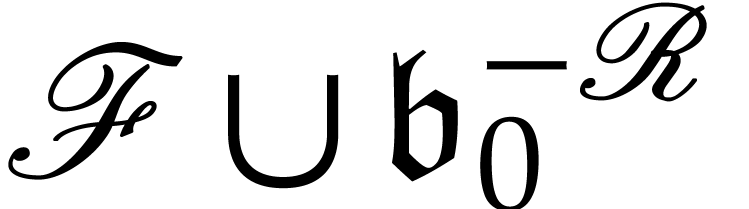 .
.
For the rest of this paper, let be an effective
ordered subfield of , let
be a transbasis, and let  be a differential ambient field. We denote by
the field of grid-based transseries.
be a differential ambient field. We denote by
the field of grid-based transseries.
4.1Linear differential equations over transseries
Consider a linear differential operator  with
with
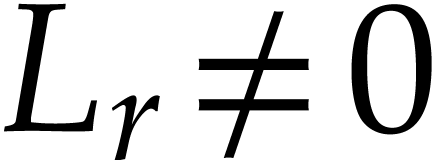 . We define
  and
and  .
.
Given 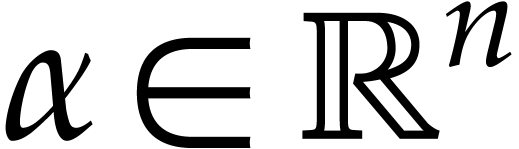 and
and  ,
we write
,
we write 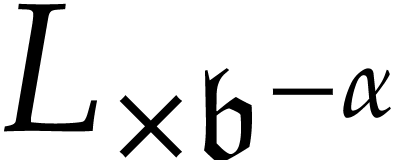 for the unique differential operator in
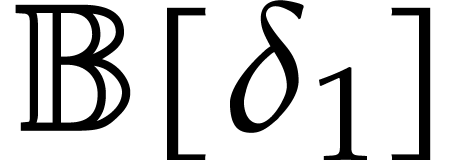 with
with  for all
 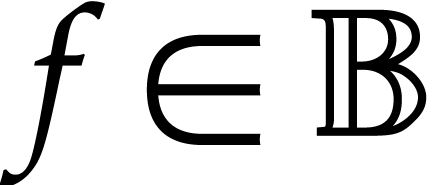 , and we let
  . We also denote by
 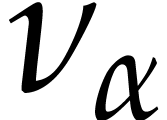 or
or 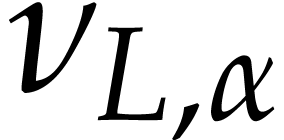 the integer such that
  and
and
 .
.
All transseries solutions of the equation 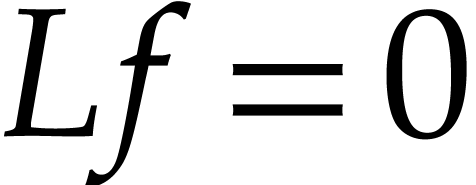 in are actually in
 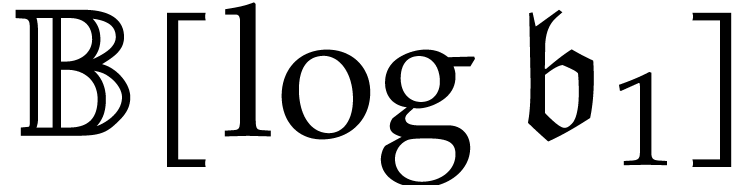 .
.
If  is a solution of
with dominant monomial
is a solution of
with dominant monomial 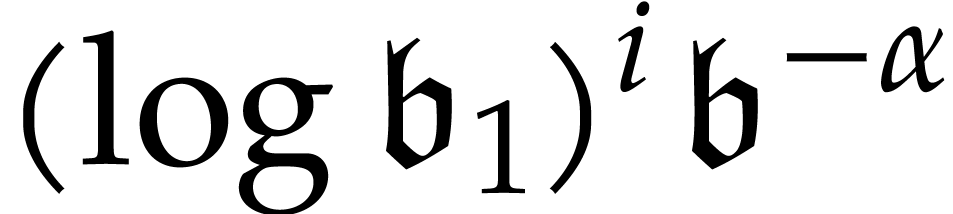 ,
then we have
,
then we have 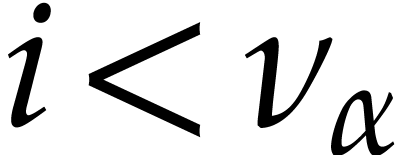 .
Conversely, any and
give rise to such a solution.
.
Conversely, any and
give rise to such a solution.
Given  , all solutions
of
, all solutions
of 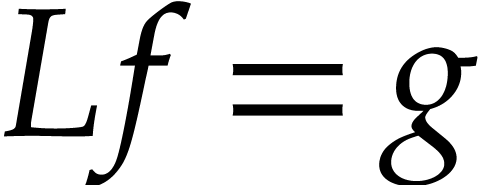 in are actually
in .
in are actually
in .
Moreover, there exists a unique solution to
in with the property that, for any and ,
the coefficient of in
vanishes.
Proof. The statements are rephrasings of [14,
Theorem 7.17] and its corollaries.
In (d), the unique solution is called
the distinguished solution of and we
denote it by 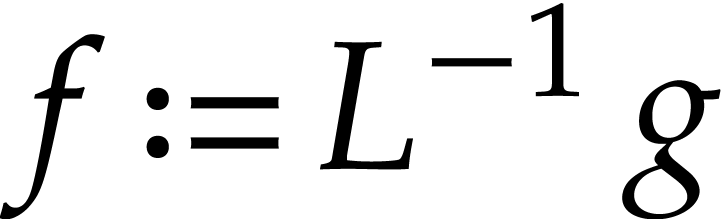 . The operator
 is linear and even preserves infinite summation
[14, Section 7.4].
is linear and even preserves infinite summation
[14, Section 7.4].
4.2Computing distinguished solutions
Given 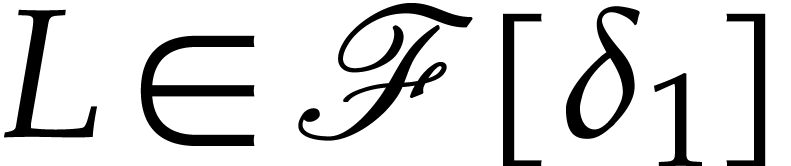 , let
, let  . We say that is
effectively linearly closed if
. We say that is
effectively linearly closed if  for
every and if we have an algorithm to compute
for
every and if we have an algorithm to compute
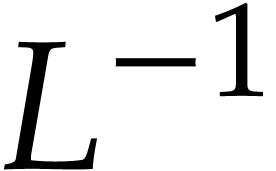 . In order to make effectively linearly closed, we need to consider sequences
of extensions
. In order to make effectively linearly closed, we need to consider sequences
of extensions 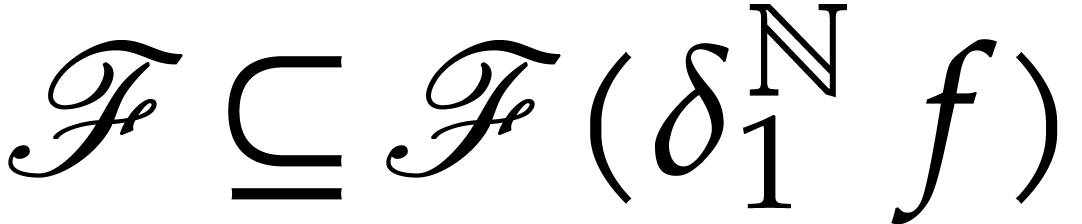 by distinguished solutions of linear differential equations. The main difficulty
concerns the design of a zero-test on such an extension
by distinguished solutions of linear differential equations. The main difficulty
concerns the design of a zero-test on such an extension 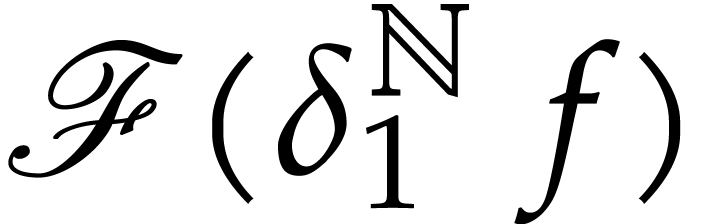 . In this subsection, we will start by showing
how to expand distinguished solutions with respect to
. In this subsection, we will start by showing
how to expand distinguished solutions with respect to 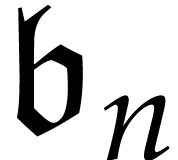 , assuming that
  is
effectively linearly closed.
is
effectively linearly closed.
So consider a linear differential operator  with
. Note that we regard
with
. Note that we regard 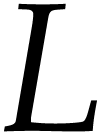 as an operator in
 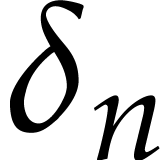 instead of
, for convenience. We define
instead of
, for convenience. We define
 , where
 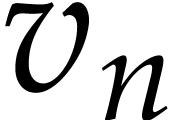 stands for the valuation with respect to .
Now let  . If
. If 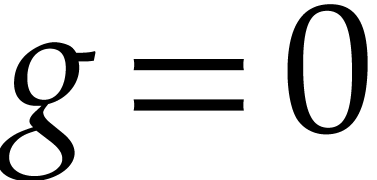 , then
 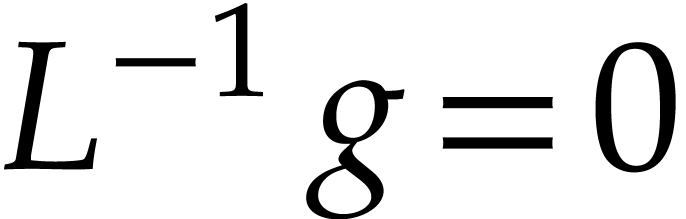 ,
so assume that
,
so assume that 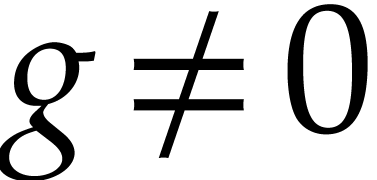 and let
 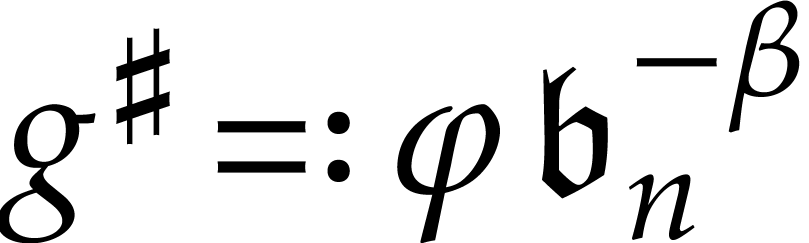 be the first term of its expansion in .
In order to compute the expansion of
be the first term of its expansion in .
In order to compute the expansion of 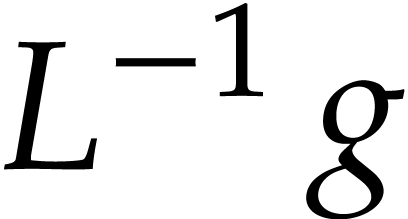 in , we may assume without loss of
generality that
in , we may assume without loss of
generality that 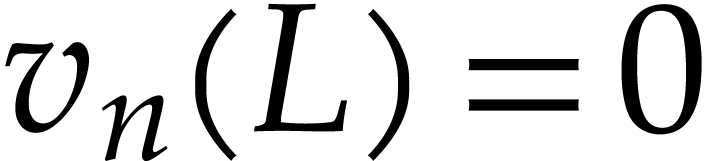 and decompose
  with
with  and
and 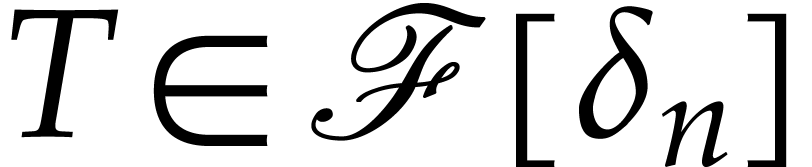 with
with 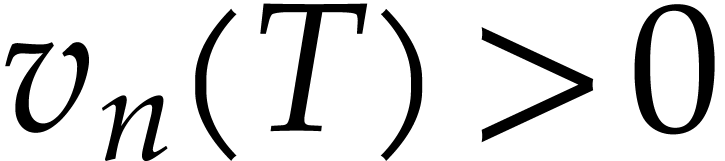 . We may now expand in a lazy manner as follows:
 |
(8) |
Here we note that  , whence
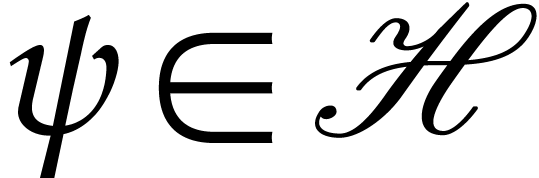 using our assumption that
 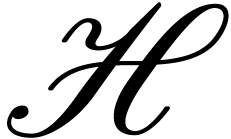 is effectively linearly closed.
We extend the classical notion of indicial polynomials [18]
to linear differential operators with transseries coefficients. Let with still be a linear
differential operator in . We
define the indicial polynomial of by
 . (If
. (If 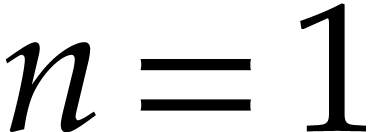 , then
  ,
but this does not hold in general.)
,
but this does not hold in general.)
Proposition and  with . If
 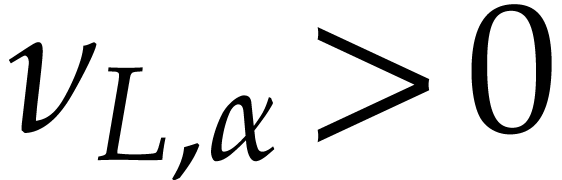 ,
then
,
then 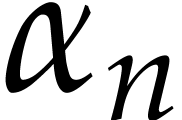 must be a root of the indicial polynomial
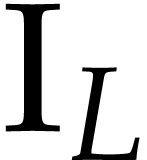 .
.
Proof. First note that  can be obtained
from
can be obtained
from 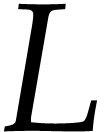 by substituting
 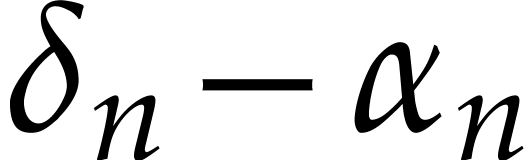 for
. In particular,
for
. In particular,  . Then writing
  ,
we have
,
we have 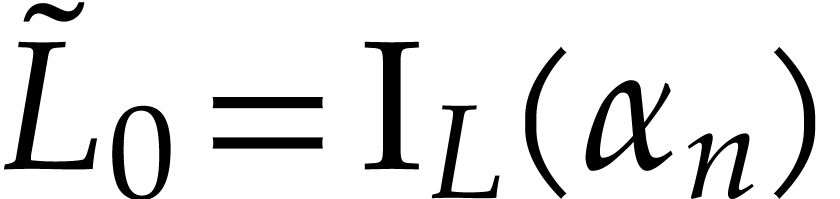 . Applying gives
  for
for  .
Therefore,
.
Therefore,  . Then rewrite
 in .
Applying
yields
in .
Applying
yields  and thus
  .
Hence once , we must have
.
Hence once , we must have
 .
.
Combining Theorem 5 and Proposition 6, if
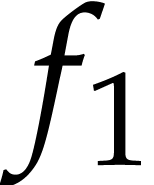 and
and 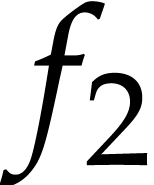 are two distinct
solutions to in
are two distinct
solutions to in 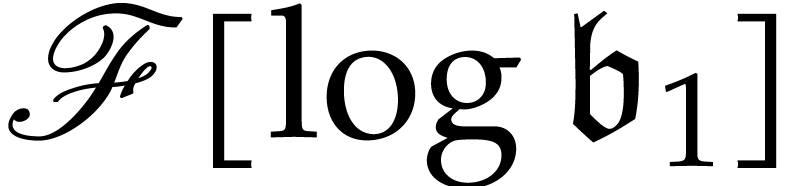 ,
then
,
then 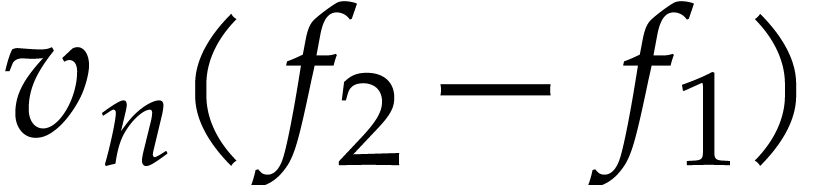 must be a root of the indicial polynomial
.
must be a root of the indicial polynomial
.
5.1Differential equations over transseries
Consider a differential polynomial 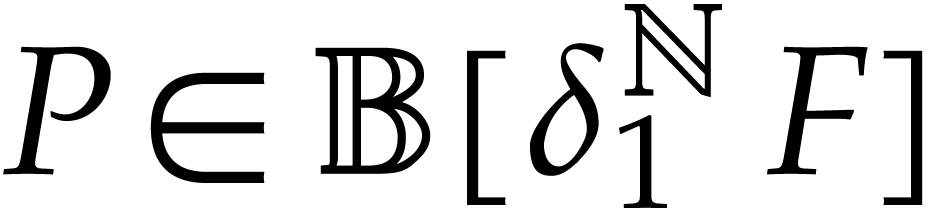 of order
  and total degree
 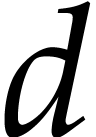 in
in 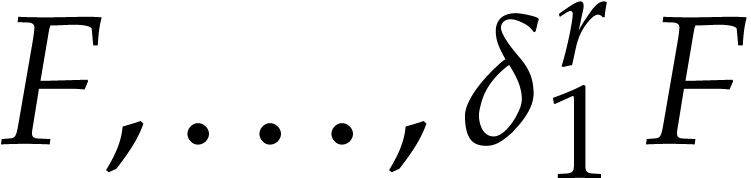 . We may also write
  with
with 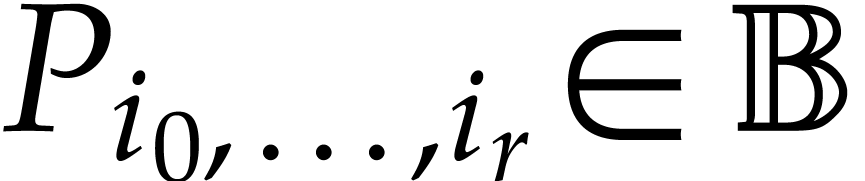 . We
define
. We
define  and
and  .
We may also decompose
.
We may also decompose  , where
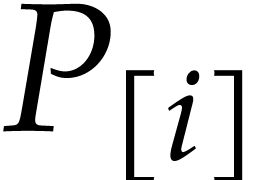 regroups all homogeneous terms of total degree
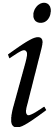 in ,
for
in ,
for 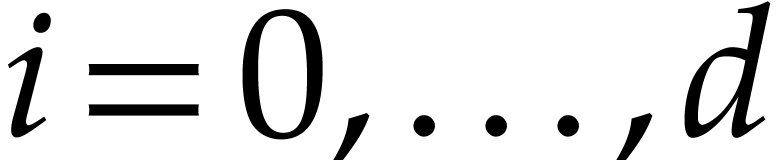 .
.
Given 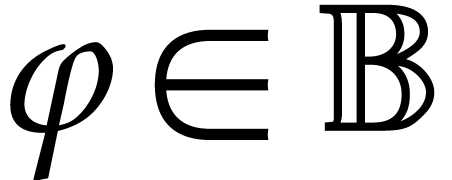 , we write
 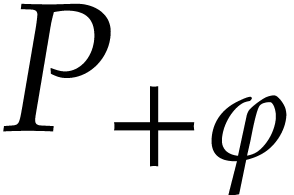 and
and 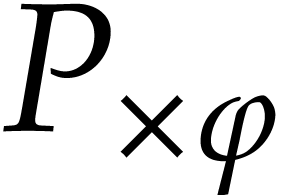 for the unique differential
polynomial in
for the unique differential
polynomial in 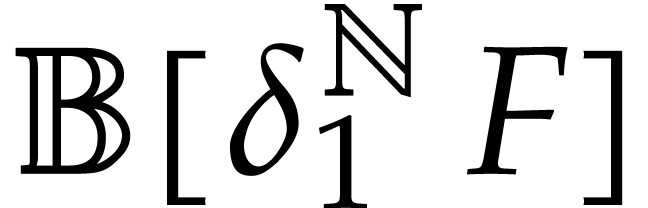 with
with  and
and
 for all ,
respectively. From (7), we get
for all ,
respectively. From (7), we get
 |
(9) |
In other words, if 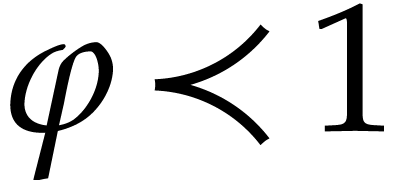 , then
 , so in particular
 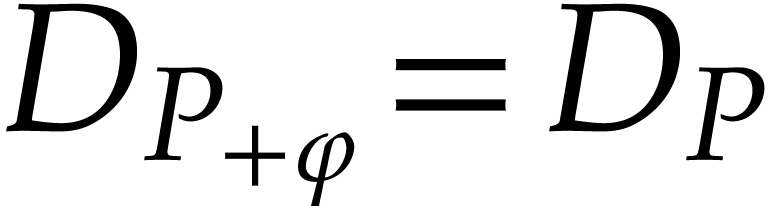 . If
. If 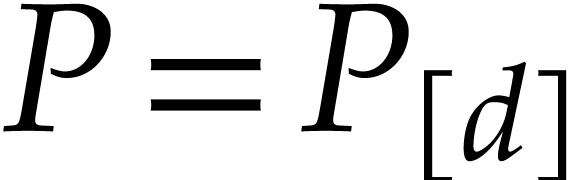 is
homogeneous of degree and
is
homogeneous of degree and 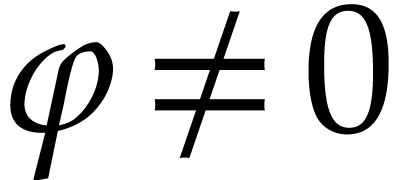 , then one also has
 |
(10) |
For details about these elementary definitions and properties, see [14, Sections 8.1, 8.2].
5.2Quasi-linear differential equations
The equation
 |
(11) |
is said to be quasi-linear if  .
More generally, if , then
.
More generally, if , then
 |
(12) |
is said to be quasi-linear if  is
quasi-linear [14, Section 8.5]. If
is
quasi-linear [14, Section 8.5]. If 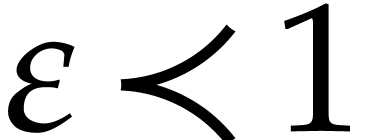 and (11) is quasi-linear, then so is the equation
  , by (9).
Consequently, if
, by (9).
Consequently, if 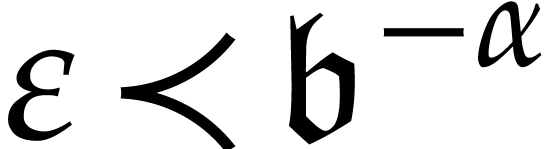 and (12) is
quasi-linear, then so is
and (12) is
quasi-linear, then so is  .
.

The equation 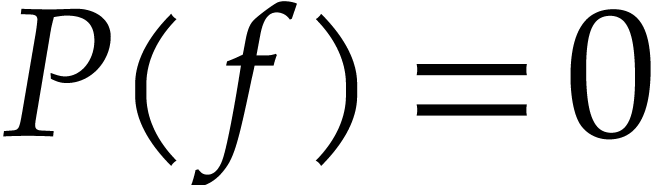 ,
, 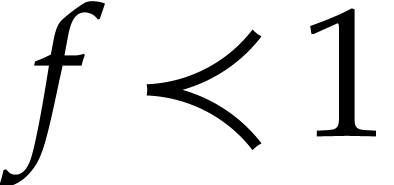 is quasi-linear, since
  .
.
Assume that (12) has a solution and
let 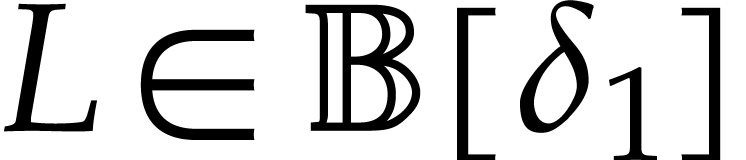 be such that
  .
Then the solution is said to be
distinguished if
.
Then the solution is said to be
distinguished if 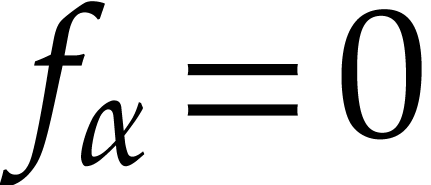 for all with .
Theorem  ,
where
,
where  . The uniqueness
persists when replacing
. The uniqueness
persists when replacing 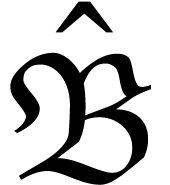 by an even larger
transbasis.
by an even larger
transbasis.
Proof. This is a rephrasing of [14, Theorem
8.21].
Remark 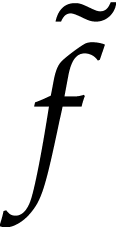 of (12)
in
of (12)
in 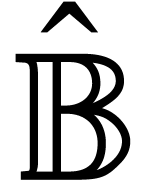 , the difference
 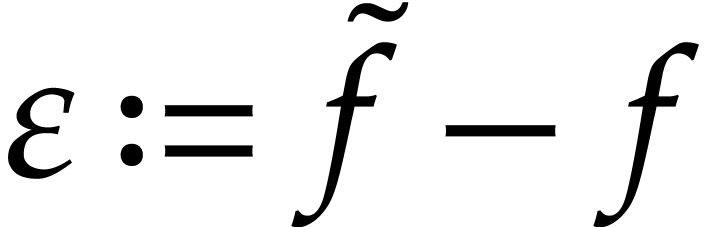 satisfies the quasi-linear equation
  . Then
 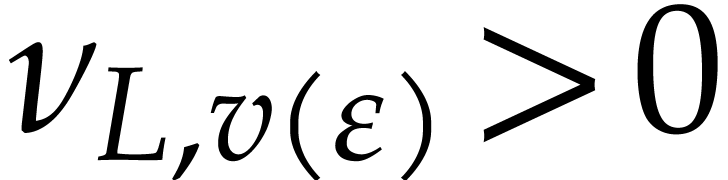 since otherwise
  . By Proposition 6,
the valuation
. By Proposition 6,
the valuation 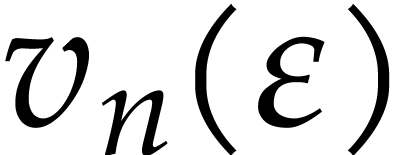 must be a root of the indicial
polynomial of , when
regarding as an operator in . This remark even goes through for complex
solutions
must be a root of the indicial
polynomial of , when
regarding as an operator in . This remark even goes through for complex
solutions 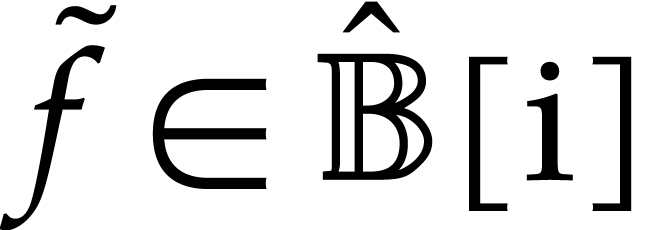 of (12).
5.3Computing distinguished solutions
Consider a normalized quasi-linear differential equation (11),
where 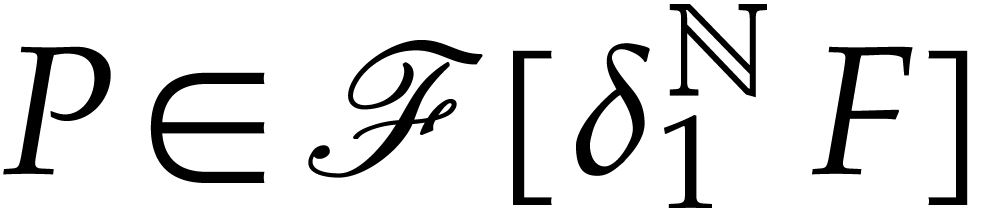 and
and 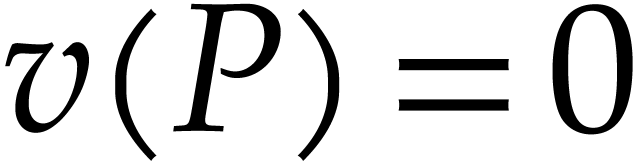 .
Assume that and have
been extended such that the distinguished solution
of (11) lies in .
The aim of this subsection is to compute the expansion
.
Assume that and have
been extended such that the distinguished solution
of (11) lies in .
The aim of this subsection is to compute the expansion  of with respect to .
We first decompose  , where
 and
and 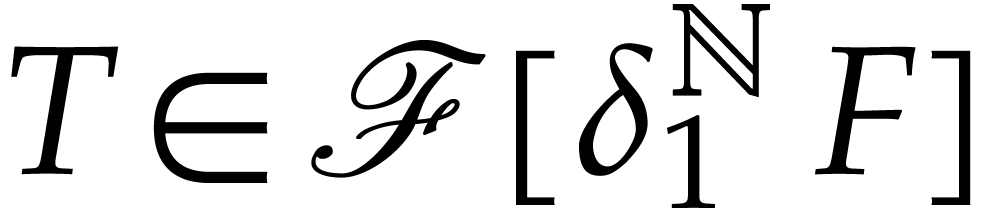 is such that
  . It is readily checked that
  is the distinguished solution of the equation
  . We will assume that we already
know how to compute this solution
. We will assume that we already
know how to compute this solution 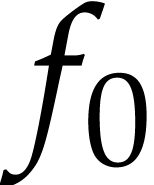 and that
 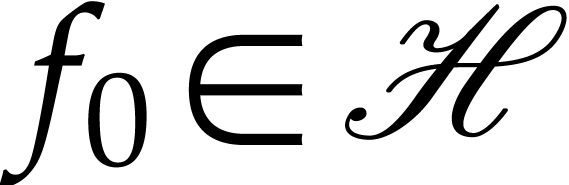 . As in Section 4.2,
we will also assume that is effectively linearly
closed.
. As in Section 4.2,
we will also assume that is effectively linearly
closed.
Now consider 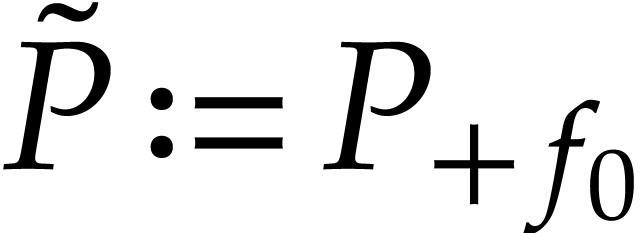 and decompose it as
  , where
  ,
,
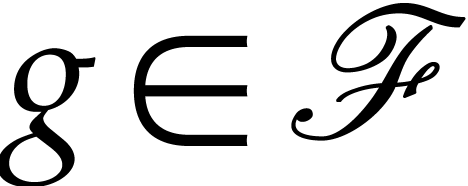 with
with 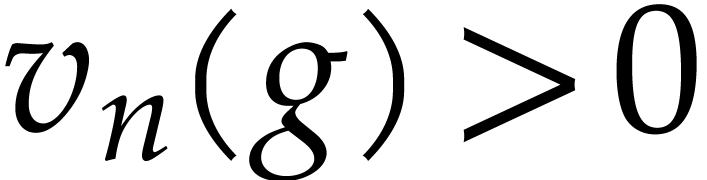 and
and 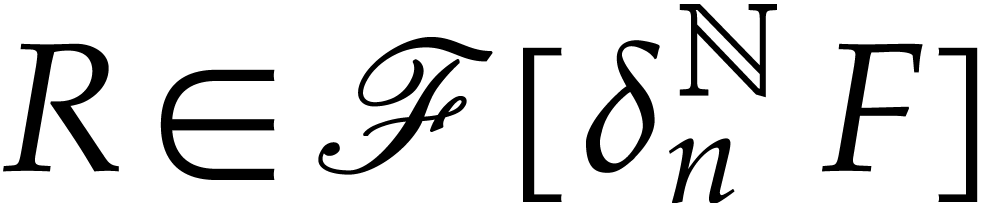 with
with  and
and 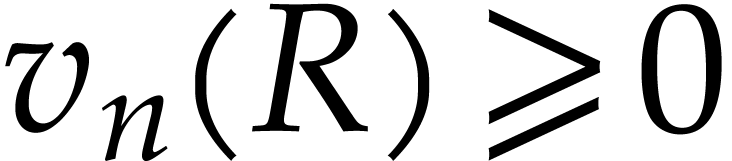 . Note that we now write and
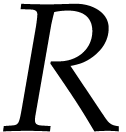 with respect to instead
of , which does not change
their valuation with respect to .
We already saw in Section 4.2 how to compute . This allows us to lazily compute
with respect to instead
of , which does not change
their valuation with respect to .
We already saw in Section 4.2 how to compute . This allows us to lazily compute 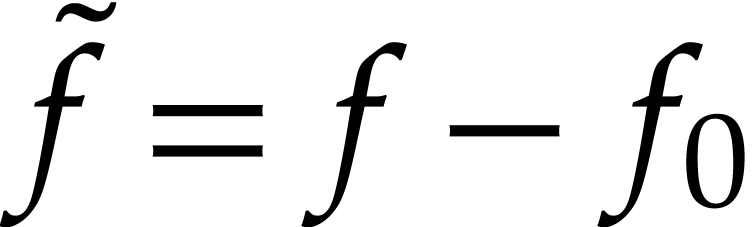 using the formula

The dependency of the right-hand side on 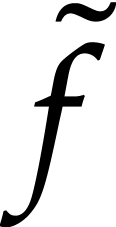 is
legit in the lazy expansion paradigm, as long as the coefficient of
is
legit in the lazy expansion paradigm, as long as the coefficient of 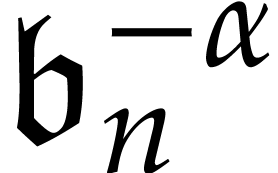 in
in 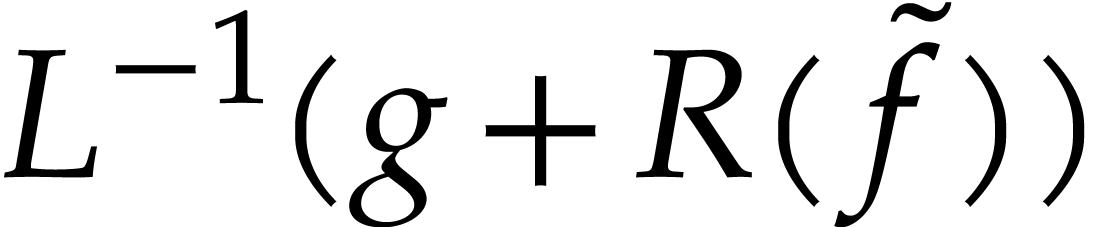 only depends on
coefficients of
only depends on
coefficients of 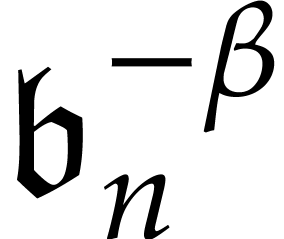 in with
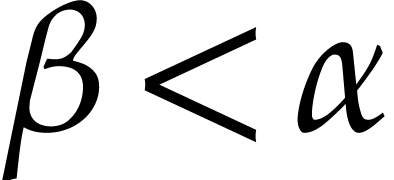 . By construction, this is
the case here.
. By construction, this is
the case here.
Example 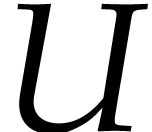 to the quasi-linear
equation , . Decomposing
to the quasi-linear
equation , . Decomposing  ,
we have
,
we have  . The distinguished
solution of
. The distinguished
solution of  is
is 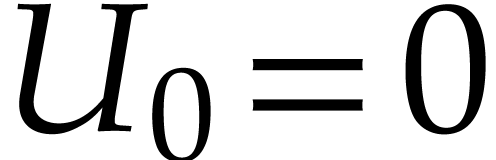 ,
so
,
so 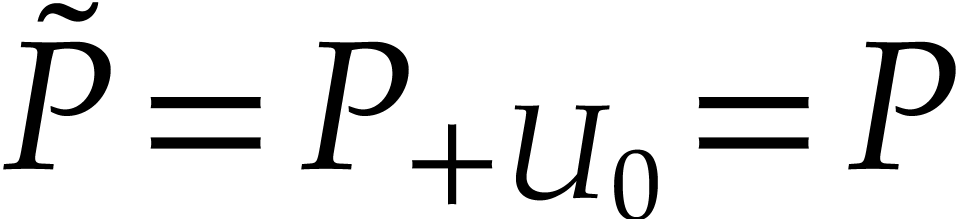 and
and 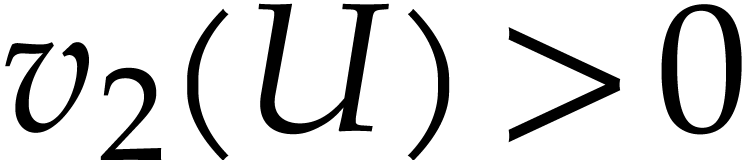 .
We now write
.
We now write

with respect to 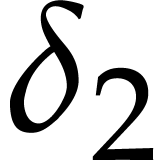 and decompose it as
  , where
 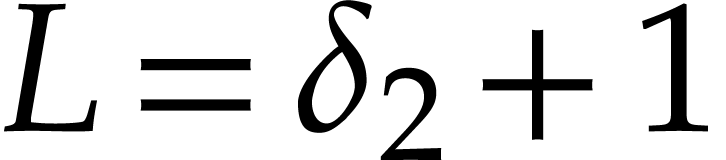 ,
,
 and
and  .
.
Then we compute using 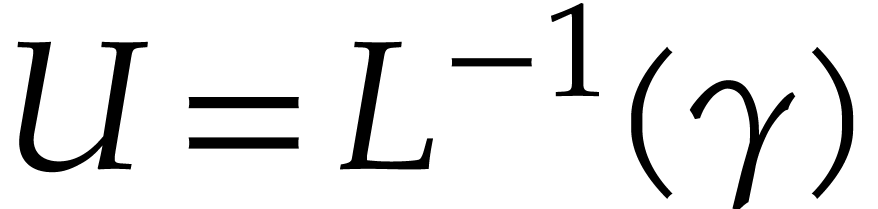 , where
  .
By
.
By  . Combining
  ,
we have
,
we have  and
and  with
with 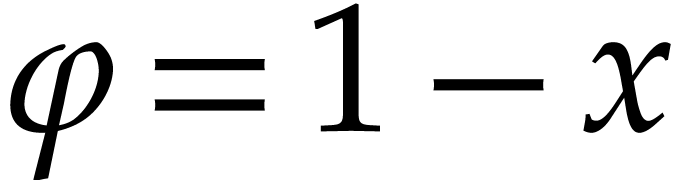 . Decompose
 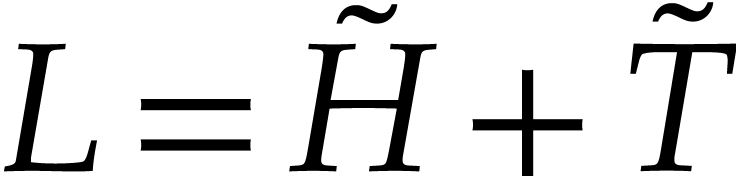 with
with 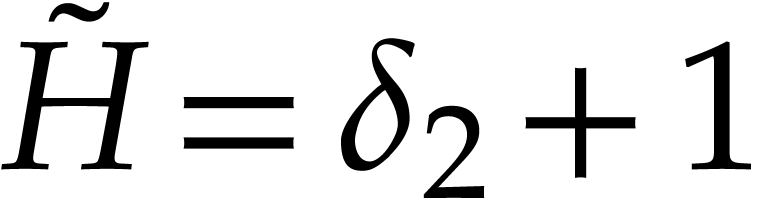 and
and 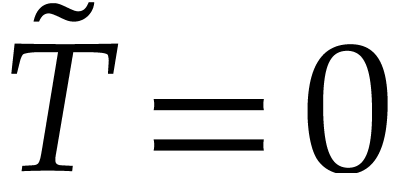 .
Then we have
.
Then we have  . Therefore,

Hence the first term of is 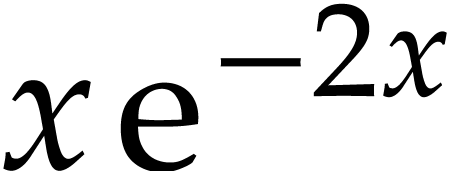 . Repeating this process, we obtain


which leads to the expansion

We first recall the basic notion of Newton degree and several related properties. Consider the extension

of with  new logarithms.
Let
new logarithms.
Let

with derivations 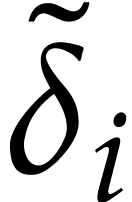 with
with 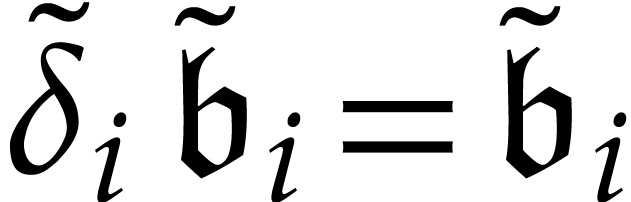 for
for  . Then any can be rewritten as an element
 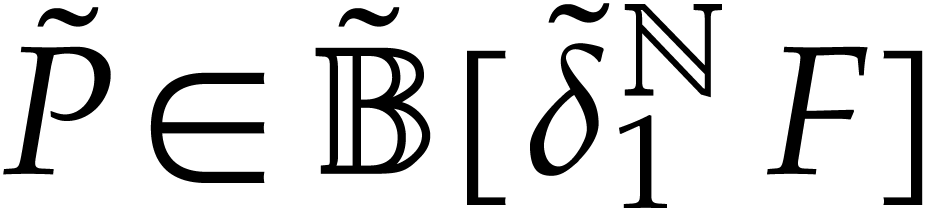 , which also corresponds to the -fold upward shifting from [14,
Section 8.2.3]; see also [1, page 293]. By [14,
Theorem 8.6] and its subsequent remark, there exist a unique polynomial
, which also corresponds to the -fold upward shifting from [14,
Section 8.2.3]; see also [1, page 293]. By [14,
Theorem 8.6] and its subsequent remark, there exist a unique polynomial
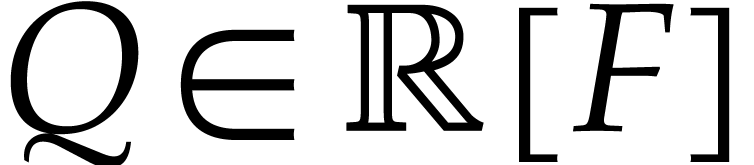 and integer
 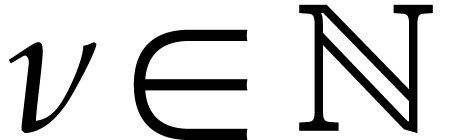 such that
 for all sufficiently large . We call
  the
differential Newton polynomial for . For a general monomial
the
differential Newton polynomial for . For a general monomial 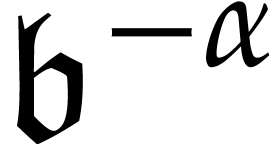 ,
the Newton degree of the asymptotic differential equation
,
the Newton degree of the asymptotic differential equation
 |
(13) |
is defined to be the largest possible degree of 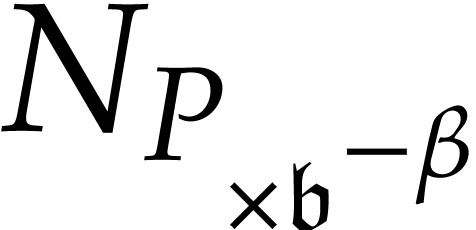 for all
 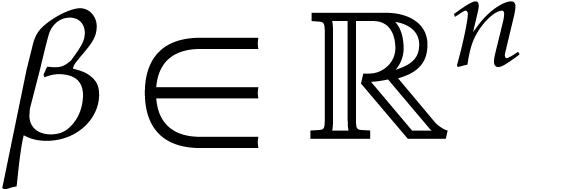 such that
 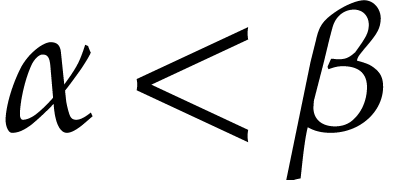 . In fact, the equation
 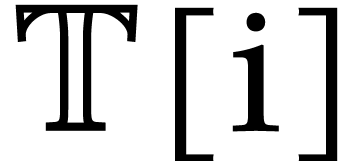 .
.
Theorem 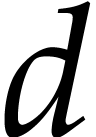 , then
solutions in
, then
solutions in 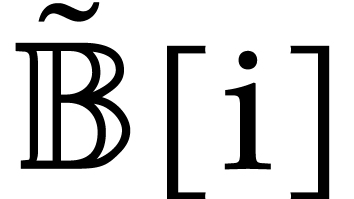 when counting with multiplicities,
provided that
when counting with multiplicities,
provided that  is sufficiently large.
Note that we can always assume that 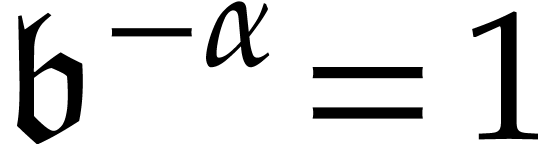 in the
equation with
in the
equation with 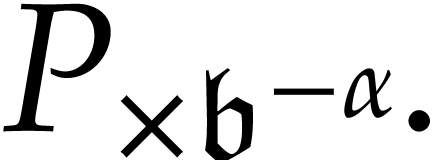 In the sequel, we will
therefore only consider the equation
In the sequel, we will
therefore only consider the equation
 |
(14) |
We may then use the following simpler criterion for the existence of solutions:
Theorem be such that 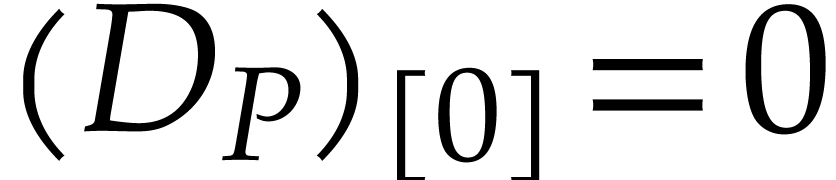 .
Then the asymptotic differential equation , provided
that is sufficiently large.
.
Then the asymptotic differential equation , provided
that is sufficiently large.
To show Theorem 12, it is sufficient to prove the following lemma.
Lemma . Then if
and only if the Newton degree of the equation
Proof. If 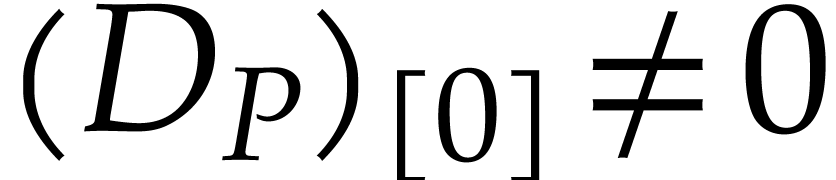 , then (7) implies that (14) cannot have any solutions in
. Theorem 11
then implies that the Newton degree of (14) must vanish.
Conversely, assume that and let
be -fold upward shifting of
, then (7) implies that (14) cannot have any solutions in
. Theorem 11
then implies that the Newton degree of (14) must vanish.
Conversely, assume that and let
be -fold upward shifting of
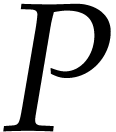 as above. Let
 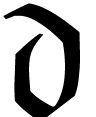 and
and 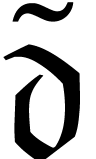 stand for the dominant monomials of
and
stand for the dominant monomials of
and  , respectively. Since
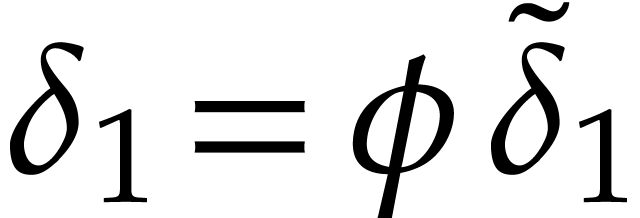 for some invertible
 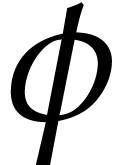 with
with
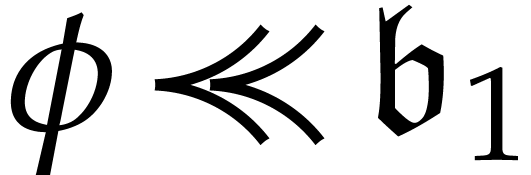 , one may verify that
 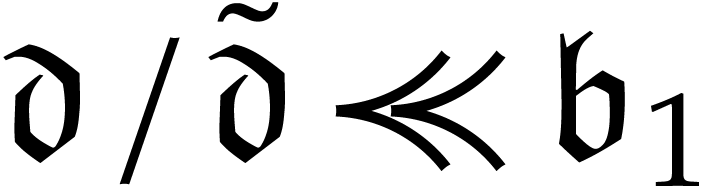 . Since , we have
 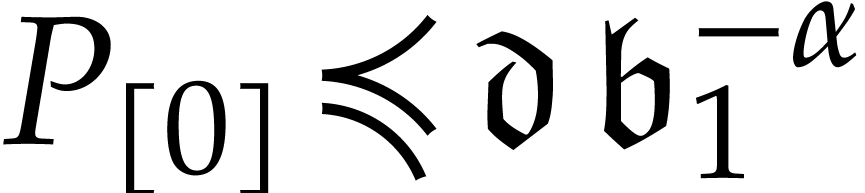 for some
 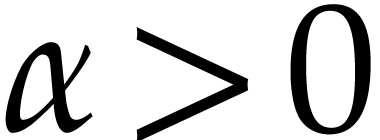 . Consequently,
  , whence
 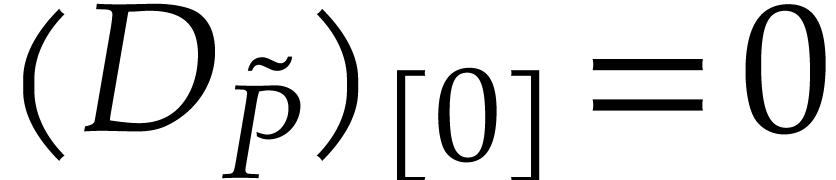 .
Taking sufficiently large such that
.
Taking sufficiently large such that  , it follows that
  .
.
6.2From general equations to quasi-linear equations
At first sight, it may seem that the mere resolution of quasi-linear differential equations is far off from solving general algebraic differential equations. But in fact, it is key the to the resolution of more general equations, due to the following consequence of [14, Section 8.7]:
Theorem 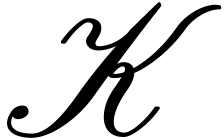 be a differential subfield of
 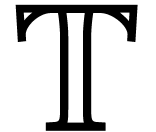 for
the derivation
for
the derivation 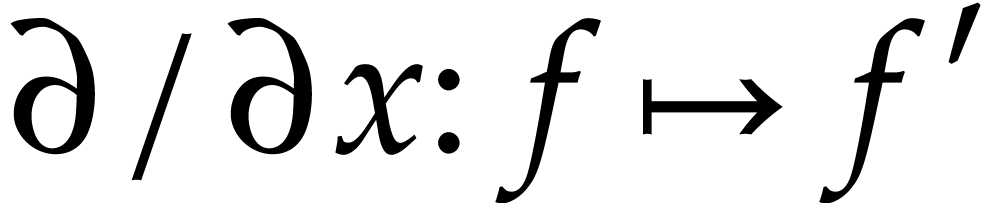 , in which any
equation
, in which any
equation 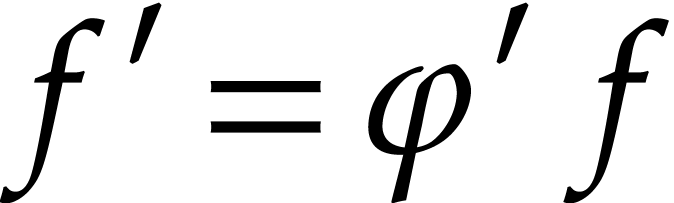 or
or 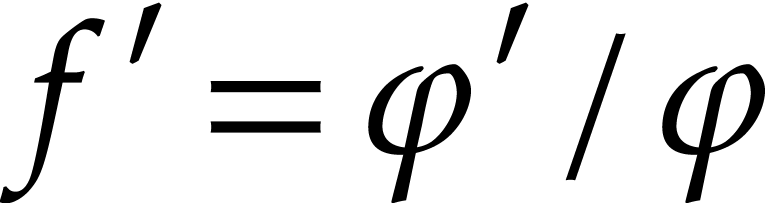 with
with 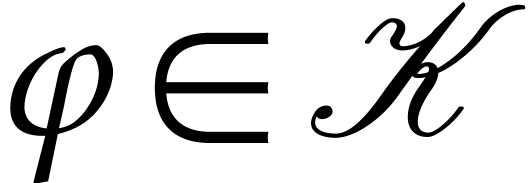 has a non-zero solution in . Assume also that every quasi-linear differential
equation with coefficients in has a solution in
. Then any root in of a differential polynomial in
has a non-zero solution in . Assume also that every quasi-linear differential
equation with coefficients in has a solution in
. Then any root in of a differential polynomial in 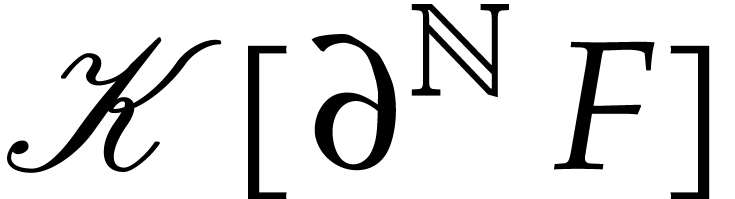 must be in .
The equations and have
 and
and 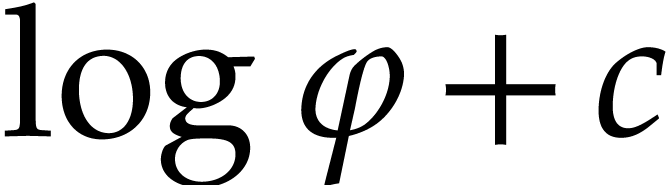 as their general
solutions, so in order to apply the theorem, it is important that we
know how to compute exponentials and logarithms of elements in and
as their general
solutions, so in order to apply the theorem, it is important that we
know how to compute exponentials and logarithms of elements in and 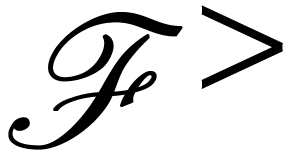 ,
respectively, while extending if necessary. For
this, we will use the same technique as in [23], but we
actually only need to compute exponentials and logarithms up to constant
factors. Moreover, due to the second condition in the theorem, we will
assume that we know how to solve quasi-linear equations.
,
respectively, while extending if necessary. For
this, we will use the same technique as in [23], but we
actually only need to compute exponentials and logarithms up to constant
factors. Moreover, due to the second condition in the theorem, we will
assume that we know how to solve quasi-linear equations.
Given 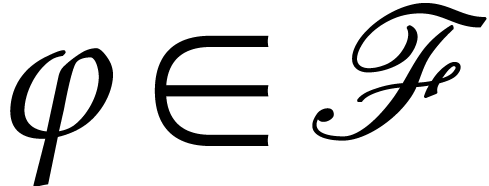 with
with  with
with 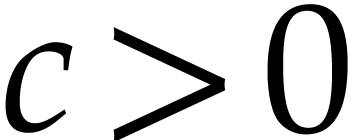 and , we
have
and , we
have

We have seen at the end of Section 3.4 how to extend with 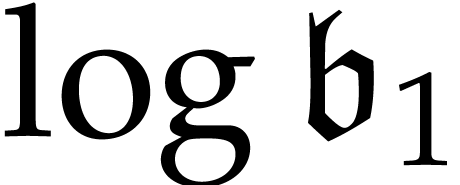 if
if 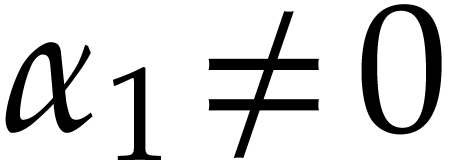 , after which
  .
If
.
If 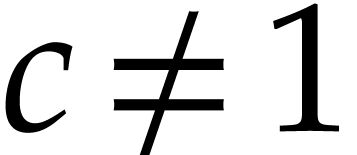 , then this may require
the extension of the constant field with
, then this may require
the extension of the constant field with 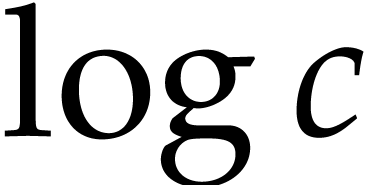 , but we may always assume
 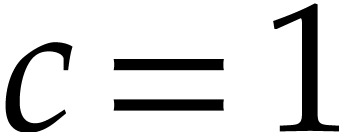 if we just wish to integrate
 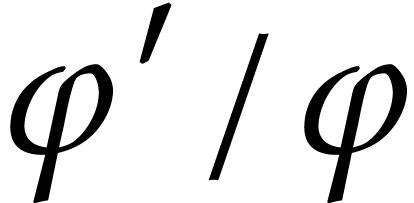 . Finally, the function
  is
the distinguished (and actually unique) solution of the quasi-linear
differential equation
is
the distinguished (and actually unique) solution of the quasi-linear
differential equation  .
.
Let . As long as 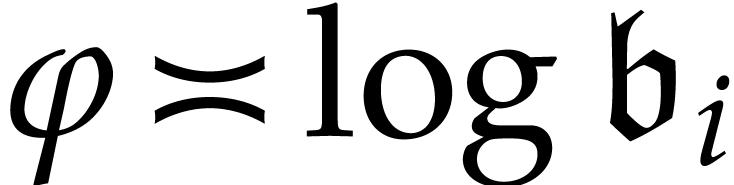 for some , we
may write
for some , we
may write  and continue with
 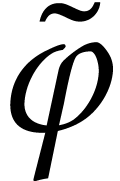 in the role of
 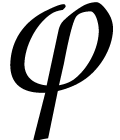 . This leads
to a decomposition
. This leads
to a decomposition

where  ,
, 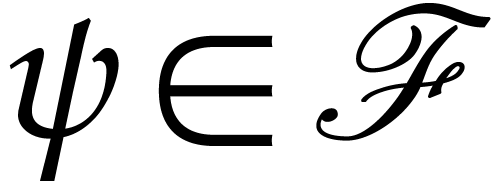 , and either
 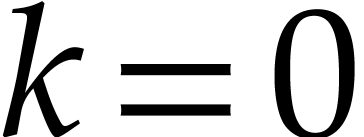 and
and 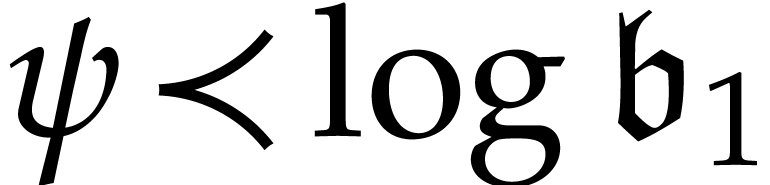 , or
, or 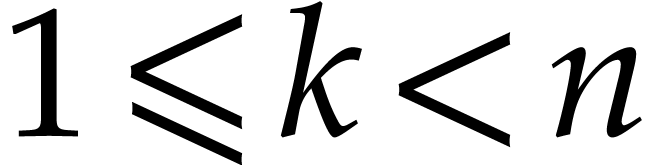 and
and
 , or
, or 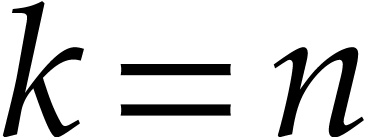 and
and 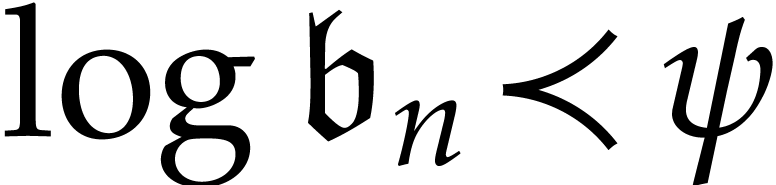 . If
. If 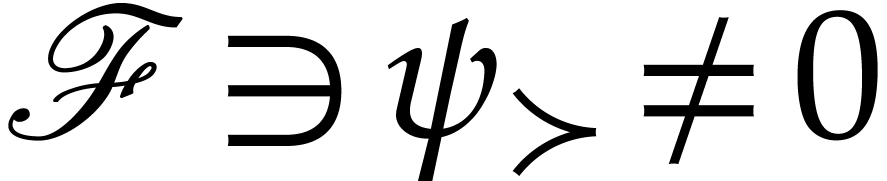 , then similar arguments as in Section 3.4
show that
, then similar arguments as in Section 3.4
show that  is again a transbasis and
  a differential ambient field that contains
 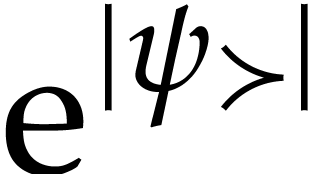 . After this extension (if necessary), we have

If 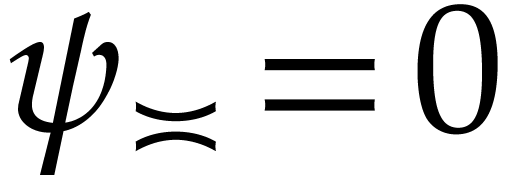 , then this may require
the extension of the constant field with
, then this may require
the extension of the constant field with 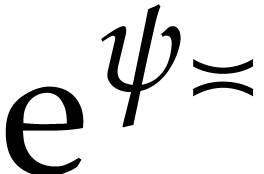 , but we may assume if we just wish to compute a non-zero solution of . We have
 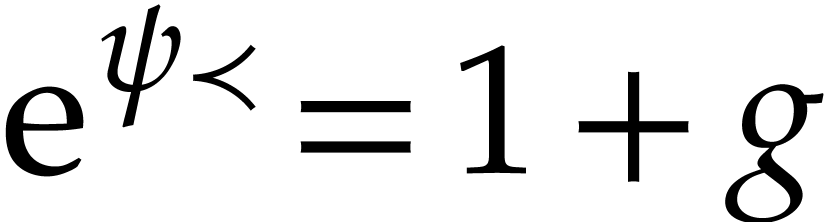 , where
 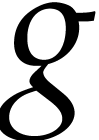 is the distinguished
(and actually unique) solution of the quasi-linear equation
is the distinguished
(and actually unique) solution of the quasi-linear equation  .
.
Example with  . First decompose
 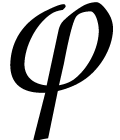 as
as  , where
 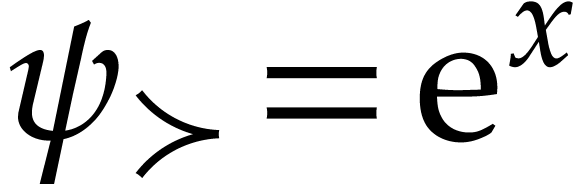 and
and 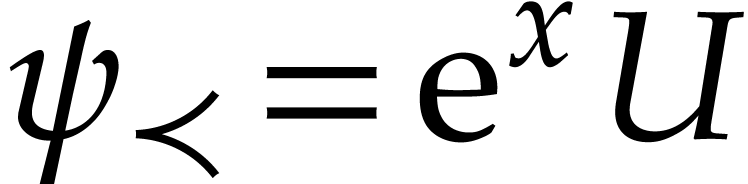 . Then extend the
transbasis
. Then extend the
transbasis 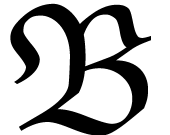 to
to 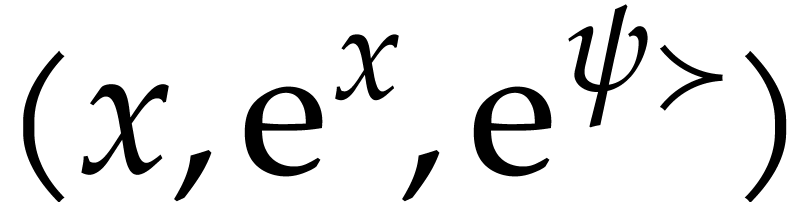 .
For
.
For 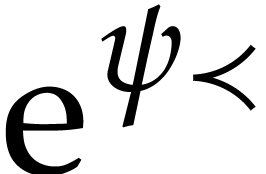 , consider the
distinguished solution
, consider the
distinguished solution 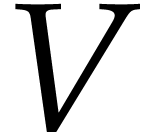 of the quasi-linear
equation
of the quasi-linear
equation 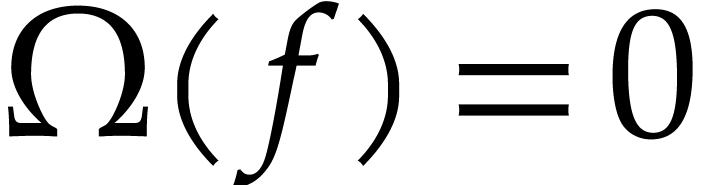 , , where

Then  and
and  .
.
Consider the admissible ranking 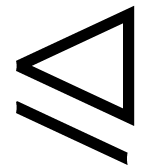 on
on 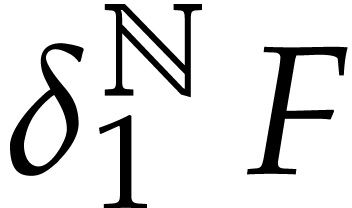 with
with 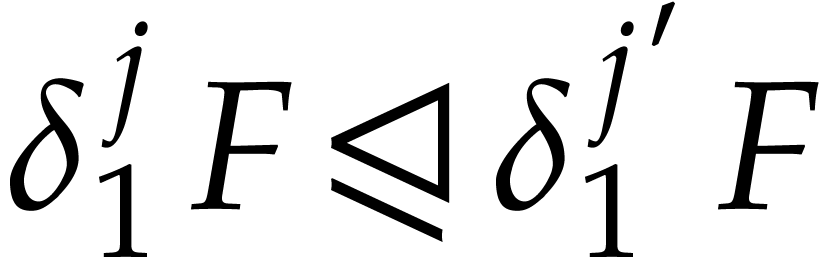 whenever
 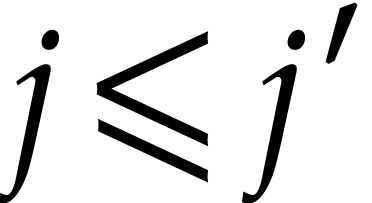 . The leader of a differential
polynomial
. The leader of a differential
polynomial  is the highest variable
 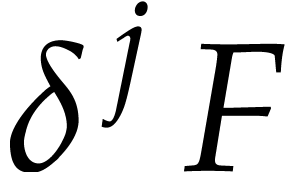 occurring in when regarding as a polynomial in
 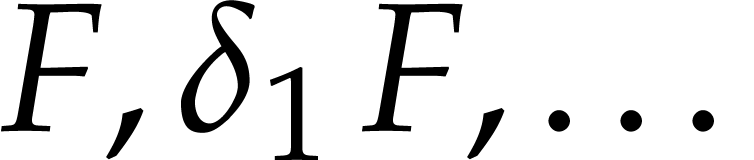 .
We will denote it by
.
We will denote it by 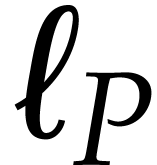 .
Considering as a polynomial in , the leading coefficient
.
Considering as a polynomial in , the leading coefficient 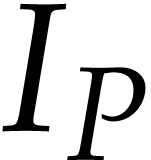 is called the initial of and
  its separant; we also define
 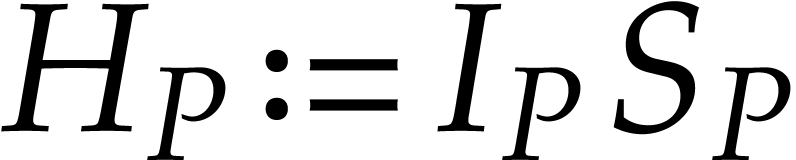 . If has degree in , then
the pair
. If has degree in , then
the pair  is called the Ritt rank of
and such pairs are ordered lexicographically. We
understand that
is called the Ritt rank of
and such pairs are ordered lexicographically. We
understand that  for polynomials
 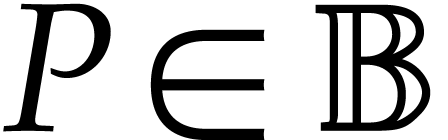 .
.
Given  , we say that is reducible with respect to
 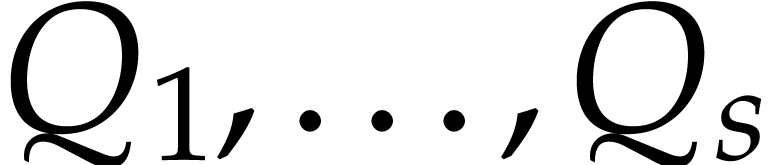 if there exists an such that
 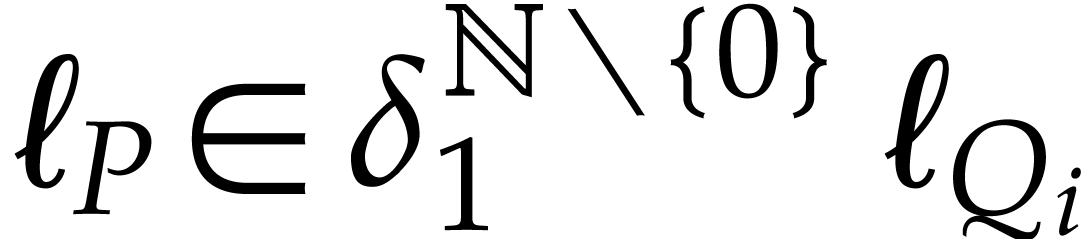 or
or 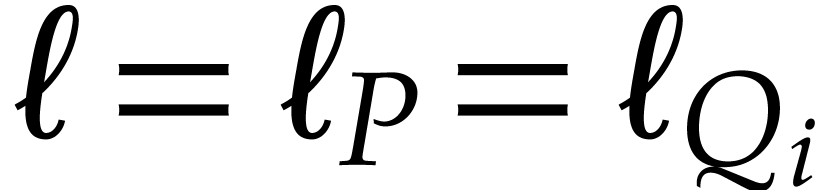 and
and  .
The process of Ritt reduction provides us with a relation of
the form
.
The process of Ritt reduction provides us with a relation of
the form

where  ,
,  ,
, 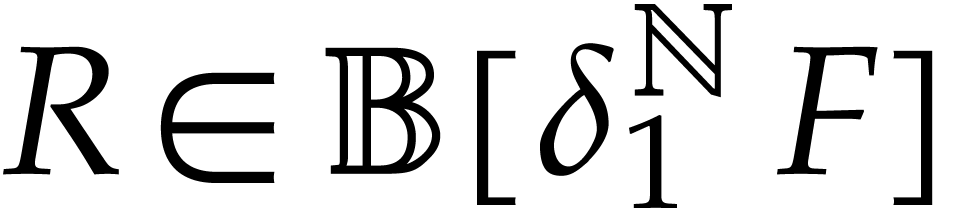 and where is reduced with respect to .
We will denote
and where is reduced with respect to .
We will denote  .
.
Assume that we are given a grid-based transseries
such that 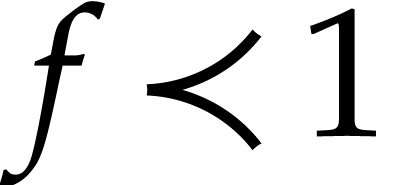 and a
differential polynomial . Let
and a
differential polynomial . Let
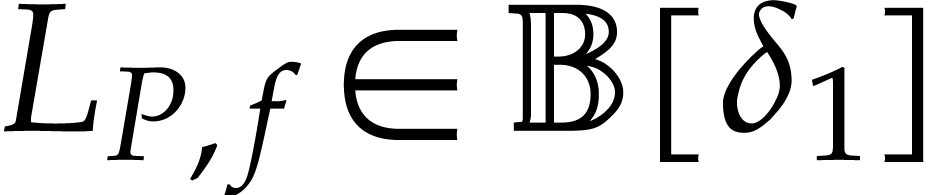 be such that
  .
Note that we have
.
Note that we have 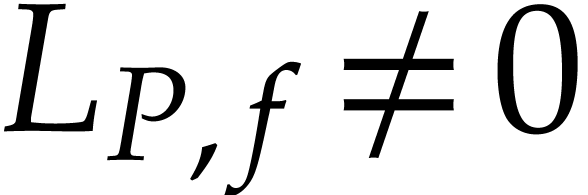 if
if 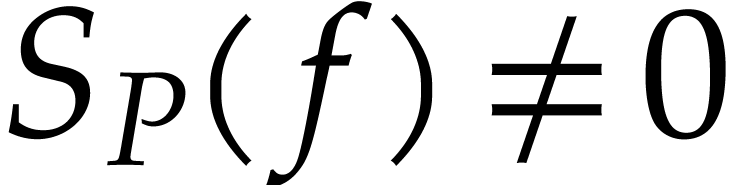 . We first present a criterion for the existence of
a root of that is sufficiently close to .
. We first present a criterion for the existence of
a root of that is sufficiently close to .
Proposition and 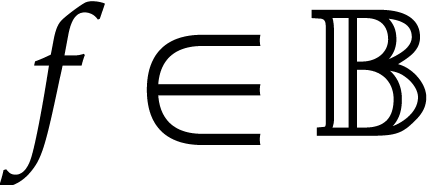 be such that and . Let
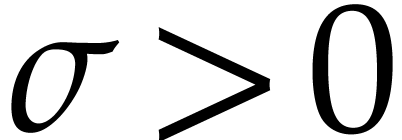 . If
. If  , then has a root in
  with
with 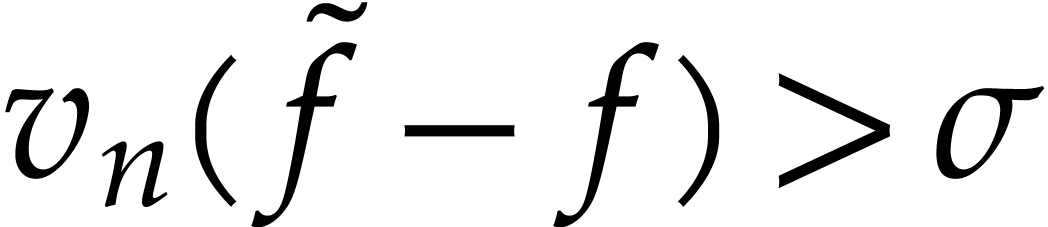 , for some
 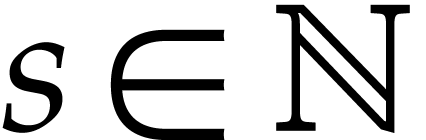 .
.
Proof. Let  and
and  . We have
  and
and  . Using (10), we now get
  . Hence
 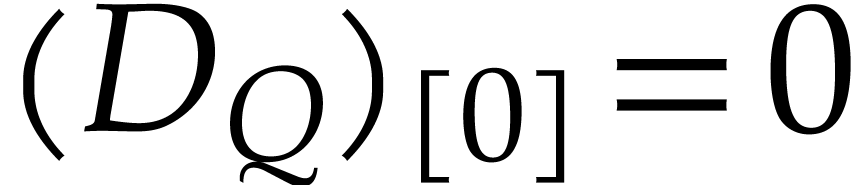 , so
, so 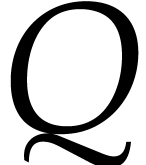 has a root
  in with
 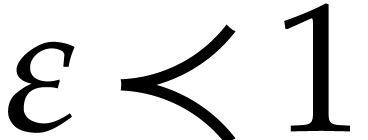 and , by Theorem 12.
Then
and , by Theorem 12.
Then  is as required.
Now assume that  is quasi-linear and let be a solution of it. Let
 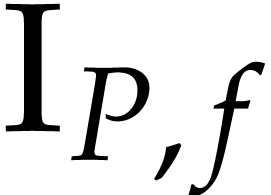 be
the indicial polynomial of
be
the indicial polynomial of 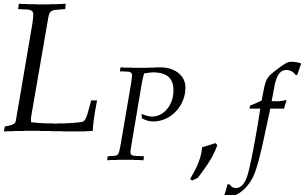 ,
considered as an operator with respect to .
We define
,
considered as an operator with respect to .
We define 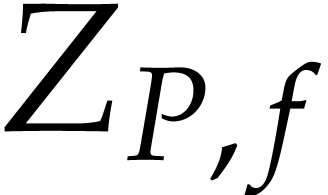 to be the largest root of in . If no such
root exists, then we set
to be the largest root of in . If no such
root exists, then we set 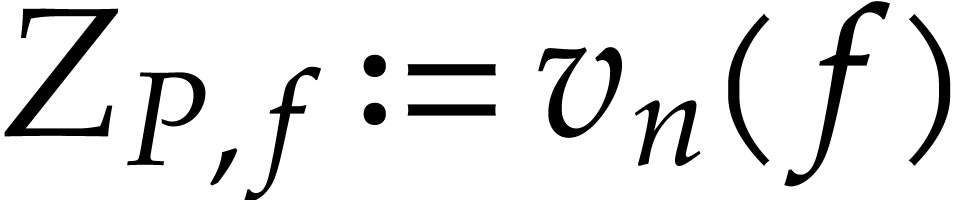 .
.
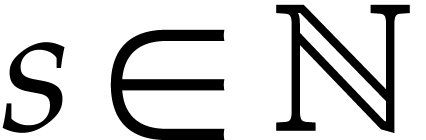
Let us show now that there always exists a threshold 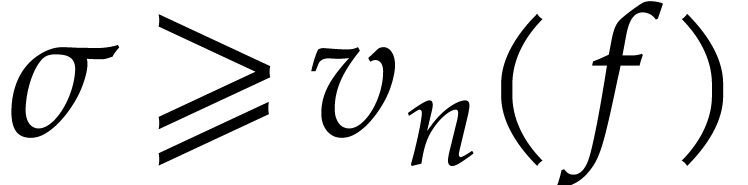 in such that for any
  and
any in with
and
any in with 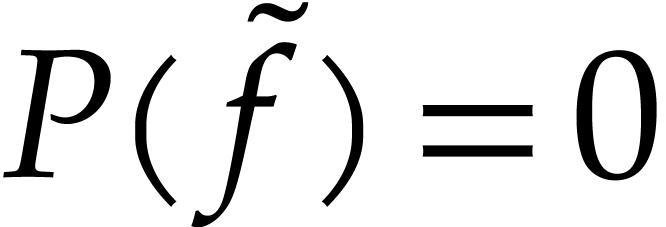 and , we have
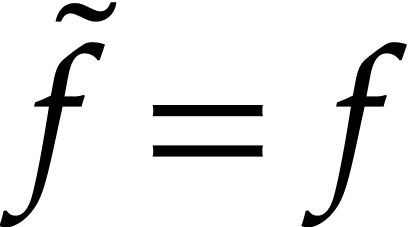 . The smallest such
 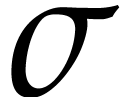 will be denoted by
 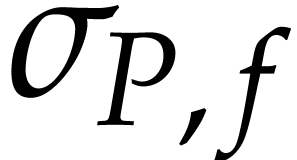 and we call it
the root separation of at .
and we call it
the root separation of at .
Proposition such that is
quasi-linear. Assume that is a solution of this
equation. Then

Proof. Consider a root  of with
 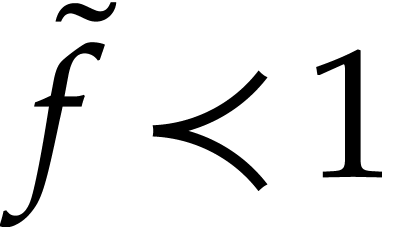 and
and 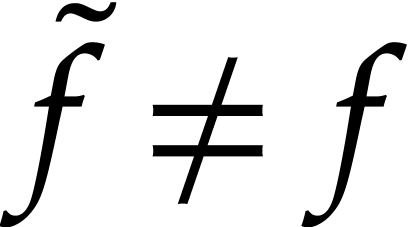 . Then Remark 9 implies that
 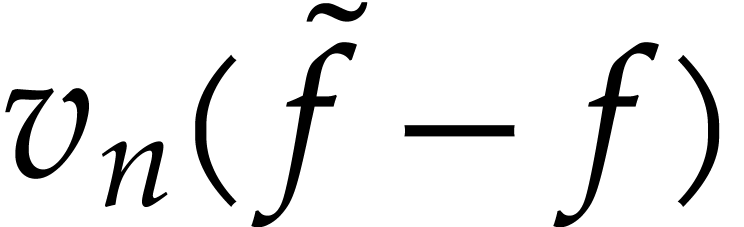 is a root of .
Consequently
is a root of .
Consequently  .
.
Consider a quasi-linear differential equation
with and assume that its distinguished solution
belongs to .
Given  , we will now present
an algorithm to check whether simultaneously
vanish at . By induction, we
suppose that a zero test on
, we will now present
an algorithm to check whether simultaneously
vanish at . By induction, we
suppose that a zero test on  has been given. In
particular, one can test whether the coefficients of
with respect to are zero and thus compute the
valuation of in .
has been given. In
particular, one can test whether the coefficients of
with respect to are zero and thus compute the
valuation of in .
Algorithm ZeroTest
 ,
ordered by non-decreasing Ritt rank
,
ordered by non-decreasing Ritt rank
 and false otherwise
| 1 |
If |
| 2 |
If |
| 3 |
If |
| 4 |
If |
| 5 |
Let |
| 6 |
Return the result of the test |
Proof. In steps 2, 3, and 4, the Ritt rank of the first
argument of  always strictly decreases; this
proves the termination of the algorithm. Furthermore, if one of the
tests in steps 2, 3, or 4 succeeds, then the algorithm is clearly
correct. In step 1, note that we assumed that
always strictly decreases; this
proves the termination of the algorithm. Furthermore, if one of the
tests in steps 2, 3, or 4 succeeds, then the algorithm is clearly
correct. In step 1, note that we assumed that 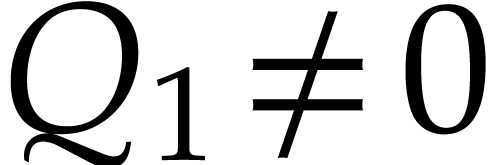 as
an element of
as
an element of 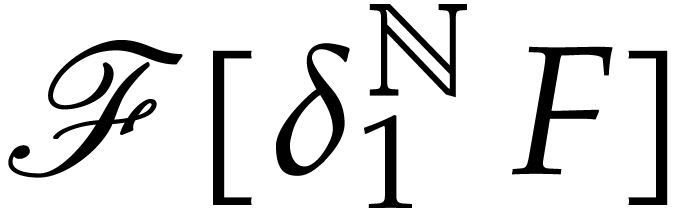 . So if
 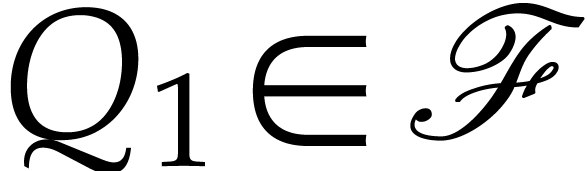 , then
  .
.
Assume now that we reach step 5. By construction, this means that 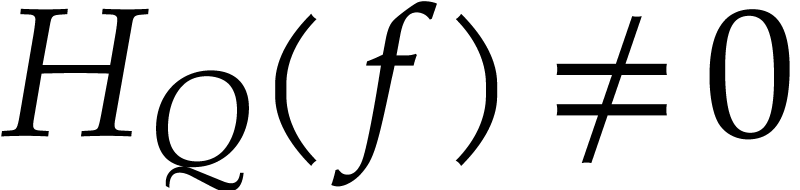 and
and  for all
  . In particular, Ritt reduction of by yields a relation
where 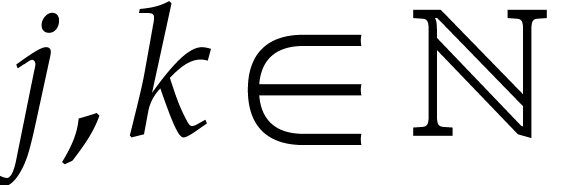 and
and  .
If
.
If  , then we clearly have
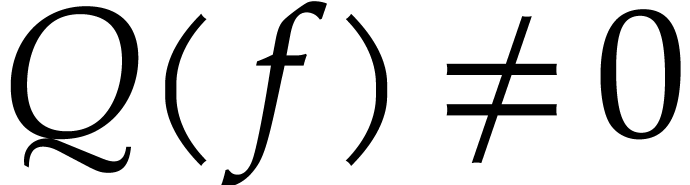 , so assume that
  . Applying Proposition 16, we
obtain a grid-based transseries such that
. Applying Proposition 16, we
obtain a grid-based transseries such that 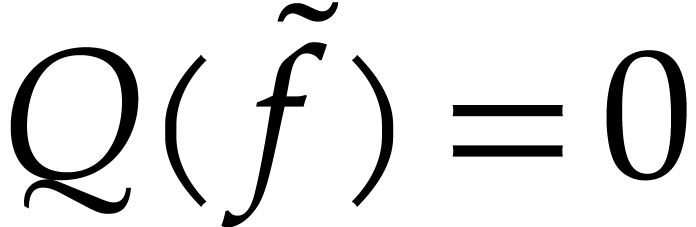 and
and 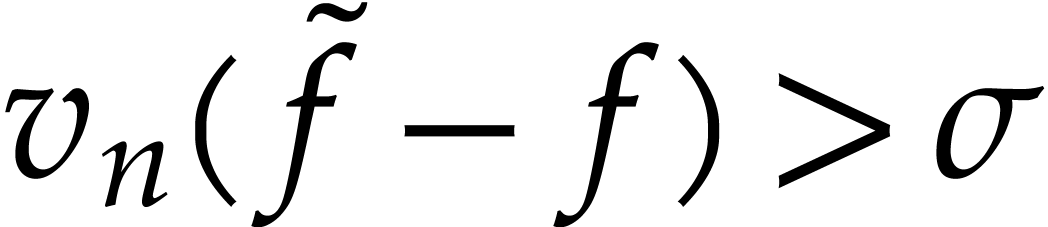 , for
some . Using (7),
it follows that
, for
some . Using (7),
it follows that
 |
(16) |
 |
(17) |
Now 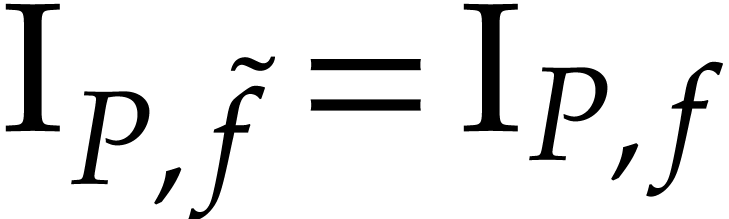 and thus
  . From
 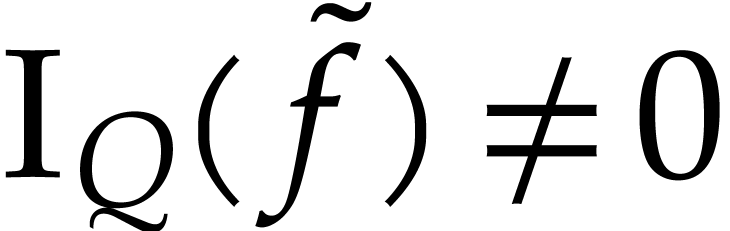 and
and
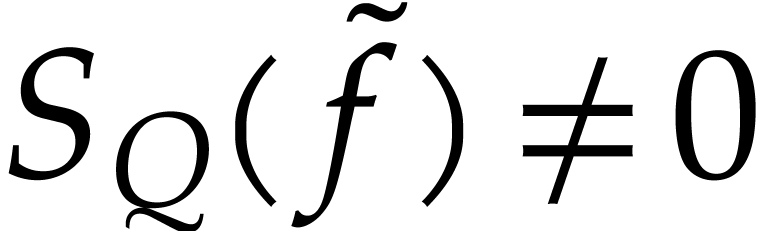 . Hence evaluating yields . Applying Proposition 17
to , we obtain
. Hence evaluating yields . Applying Proposition 17
to , we obtain 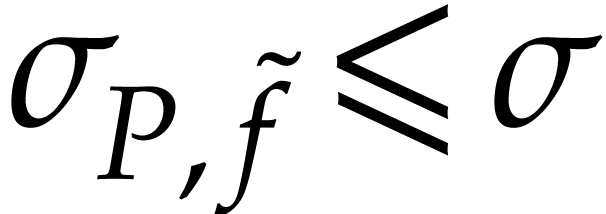 . Since ,
we conclude that . From
. Since ,
we conclude that . From 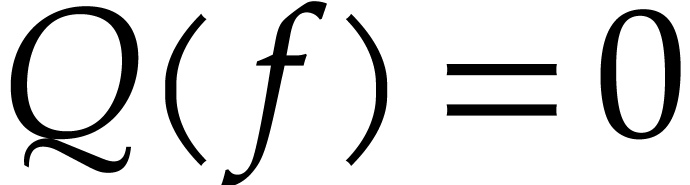 , Ritt reduction of
 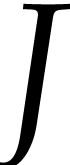 by also yields
 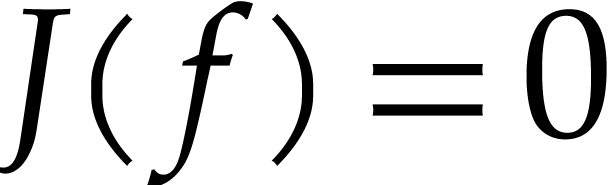 for all
  .
.
Theorem  be a differential ambient field (which comes with a zero
test, by assumption). Let
be a differential ambient field (which comes with a zero
test, by assumption). Let  be a differential
polynomial. If is a quasi-linear equation with a
distinguished solution
be a differential
polynomial. If is a quasi-linear equation with a
distinguished solution  , then
 is again a differential ambient field.
Proof. Our zero test on 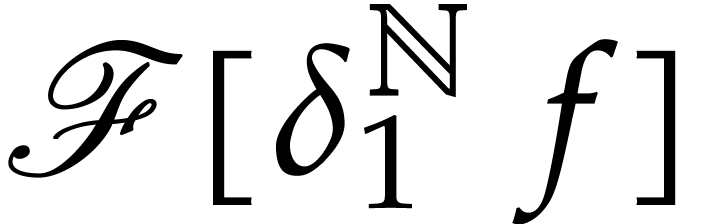 trivially
extends to the quotient field
trivially
extends to the quotient field 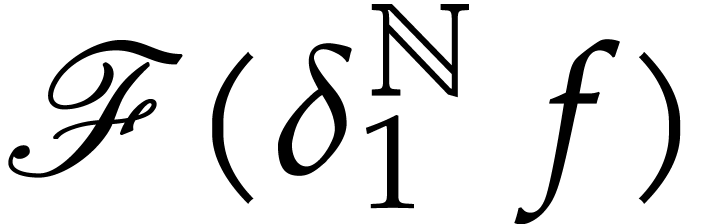 since a fraction
vanishes if and only if its numerator does. We may use the algorithms
from Sections 2.4, 3.4, and 5.3
to compute expansions of elements in .
since a fraction
vanishes if and only if its numerator does. We may use the algorithms
from Sections 2.4, 3.4, and 5.3
to compute expansions of elements in .
7.4A worked example:
the Lambert 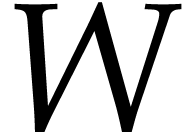 function
Following from Examples 7, 10 and 15,
consider the distinguished transseries solution 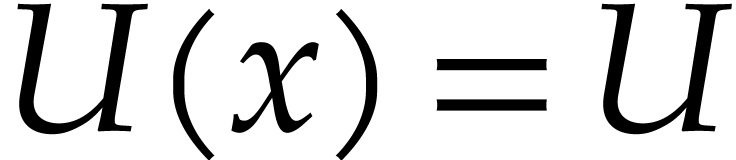 of ,
and let
of ,
and let

We will use ZeroTest to show that 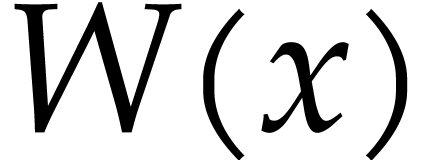 satisfies

i.e., 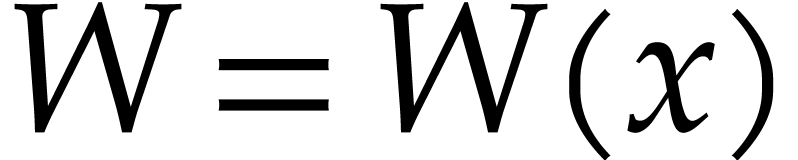 is a real branch of the Lambert function at infinity [3]. To this
end, it is enough to verify that
is a real branch of the Lambert function at infinity [3]. To this
end, it is enough to verify that
 |
(18) |
In Example 15, we computed  .
Then the equality
.
Then the equality 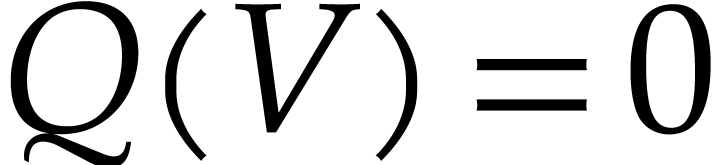 , where

Now we apply ZeroTest algorithm to 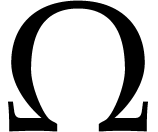 ,
, 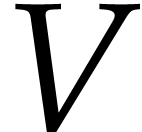 and
over . Since
and
over . Since  , we have
  and thus the
algorithm proceeds to step 4. Ritt reduction yields
and thus the
algorithm proceeds to step 4. Ritt reduction yields

Since 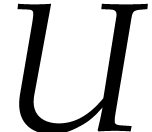 is a root of ,
we obtain
is a root of ,
we obtain  , leading the
algorithm to step 5. Writing
, leading the
algorithm to step 5. Writing  ,
we have
,
we have  ,
,  , and thus
 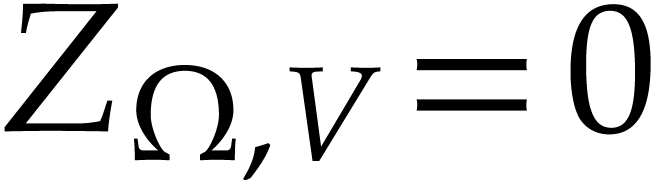 .
Hence, we take
.
Hence, we take 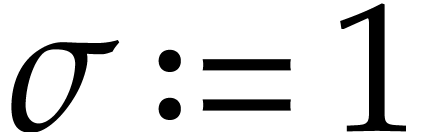 . Since
  , we only need to test whether
  in the final step 6:

As a result, we finally obtain that is a root of
and thus show that is a
real branch of the Lambert function.
M. Aschenbrenner, L. van den Dries, and J. van der Hoeven. Asymptotic Differential Algebra and Model Theory of Transseries. Number 195 in Annals of Mathematics studies. Princeton University Press, 2017.
F. Boulier. Étude et implantation de quelques algorithmes en algèbre différentielle. PhD thesis, University of Lille I, 1994.
R. M. Corless, G. H. Gonnet, D. E. G. Hare, D. J.
Jeffrey, and D. E. Knuth. On the Lambert
function. Adv. Comput. Math., 5(4):329–359, 1996.
B. I. Dahn and P. Göring. Notes on exponential-logarithmic terms. Fundamenta Mathematicae, 127:45–50, 1986.
J. Denef and L. Lipshitz. Power series solutions of algebraic differential equations. Math. Ann., 267:213–238, 1984.
J. Denef and L. Lipshitz. Decision problems for differential equations. The Journ. of Symb. Logic, 54(3):941–950, 1989.
J. Écalle. Introduction aux fonctions analysables et preuve constructive de la conjecture de Dulac. Hermann, collection: Actualités mathématiques, 1992.
K. O. Geddes and G. H. Gonnet. A new algorithm for computing symbolic limits using hierarchical series. In Proc. ISSAC '88, volume 358 of Lect. Notes in Comp. Science, pages 490–495. Springer, 1988.
J. van der Hoeven. Outils effectifs en asymptotique et applications. Technical Report LIX/RR/94/09, LIX, École polytechnique, France, 1994.
J. van der Hoeven. Automatic asymptotics. PhD thesis, École polytechnique, Palaiseau, France, 1997.
J. van der Hoeven. Complex transseries solutions to algebraic differential equations. Technical Report 2001-34, Univ. d'Orsay, 2001.
J. van der Hoeven. A new zero-test for formal power series. In Teo Mora, editor, Proc. ISSAC '02, pages 117–122. Lille, France, July 2002.
J. van der Hoeven. Relax, but don't be too lazy. JSC, 34:479–542, 2002.
J. van der Hoeven. Transseries and real differential algebra, volume 1888 of Lecture Notes in Mathematics. Springer-Verlag, 2006.
J. van der Hoeven. Computing with D-algebraic power series. AAECC, 30(1):17–49, 2019.
J. van der Hoeven. The Jolly Writer. Your Guide to GNU TeXmacs. Scypress, 2020.
J. van der Hoeven and J. R. Shackell. Complexity bounds for zero-test algorithms. JSC, 41:1004–1020, 2006.
E. L. Ince. Ordinary differential equations. Longmans, Green and Co., 1926. Reprinted by Dover in 1944 and 1956.
A. G. Khovanskii. Fewnomials, volume 88 of Translations of Mathematical Monographs. AMS, Providence RI, 1991.
E. R. Kolchin. Differential algebra and algebraic groups. Academic Press, New York, 1973.
T. Levi-Civita. Sugli infiniti ed infinitesimi attuali quali elimenti analitici. Atti ist. Ven., 7:1765–1815, 1893.
A. Péladan-Germa. Tests effectifs de nullité dans des extensions d'anneaux différentiels. PhD thesis, Gage, École Polytechnique, Palaiseau, France, 1997.
D. Richardson, B. Salvy, J. Shackell, and J. van der Hoeven. Expansions of exp-log functions. In Proc. ISSAC '96, pages 309–313. Zürich, Switzerland, July 1996.
R. H. Risch. Algebraic properties of elementary functions in analysis. Amer. Journ. of Math., 4(101):743–759, 1975.
J. F. Ritt. Differential algebra. Amer. Math. Soc., New York, 1950.
J. Shackell. A differential-equations approach to functional equivalence. In Proc. ISSAC '89, pages 7–10. Portland, Oregon, ACM, New York, 1989. ACM Press.
J. Shackell. Zero equivalence in function fields defined by differential equations. Proc. of the AMS, 336(1):151–172, 1993.
 ,
, ,
, then return false
 then return
 then return
 then return

